

 JA
JA  EN
EN  ES
ES  PT
PT  VI
VI  FR
FR  DE
DE  IT
IT  KO
KO  AR
AR  PL
PL  TR
TR  BG
BG  MS
MS  RU
RU ニュース
Expert Guide 2026: How Are Roller Bearings Made in 7 Crucial Steps
Abstract The manufacturing of roller bearings is a meticulous and multi-stage process that transforms raw high-carbon chromium steel into a product of extreme precision and durability. This process is fundamental to the function of countless machines across global industries. An examination of how roller bearings are made reveals a sequence of carefully controlled operations, beginning with the forging of raw material into the rough shapes of the inner ring, outer ring, and rolling elements. Subsequent stages involve annealing to soften the steel for machining, followed by turning and lathing to define the basic geometry. The most transformative stage is heat treatment, where hardening and tempering impart the necessary strength and […]
Avoid These 5 Costly Failures: A Tapered Roller Bearing Must Be Adjusted Because…
Abstract Tapered roller bearings possess a unique and fundamental design characteristic: they are separable. The inner ring assembly, comprising the cone, rollers, and cage, can be mounted independently of the outer ring, or cup. This separability, which is the very source of their exceptional capacity for managing combined radial and axial loads, introduces a non-negotiable requirement for manual adjustment upon installation. The operational internal clearance or preload is not an inherent feature of the bearing but is established by the precise axial positioning of the cone relative to the cup. Consequently, a tapered roller bearing must be adjusted because its performance, operational lifespan, and the integrity of the surrounding machinery […]
Expert Guide: 5 Factors When a Straight Cylindrical Roller Bearing is Subjected to Heavy Loads
Abstract The operational integrity of heavy industrial machinery is profoundly dependent on the performance of its components, among which the straight cylindrical roller bearing holds a position of paramount importance. This analysis examines the complex interplay of forces and environmental conditions to which a straight cylindrical roller bearing is subjected, particularly under circumstances of high load. It deconstructs five pivotal factors: the management of extreme radial forces, the inherent limitations concerning axial loads, the thermomechanical challenges arising from operational speed, the acute sensitivity to misalignment, and the indispensable role of lubrication and contamination control. The investigation reveals that the bearing's longevity and reliability are not merely functions of its intrinsic […]
What is a Roller Bearing?: A Practical Guide to Selecting from 4 Main Types in 2026
Abstract A roller bearing is a fundamental mechanical component engineered to mitigate rotational friction and support loads between moving parts. This is achieved through the use of cylindrical or barrel-shaped rolling elements situated between two concentric rings, known as races. Unlike ball bearings, which utilize point contact, a roller bearing employs line contact between the rolling element and the raceways. This geometric distinction allows for the distribution of loads over a larger surface area, granting roller bearings a significantly higher capacity for carrying heavy radial and impact loads. They are indispensable in a vast array of heavy-duty applications, from automotive transmissions and industrial gearboxes to construction machinery and wind turbines. […]
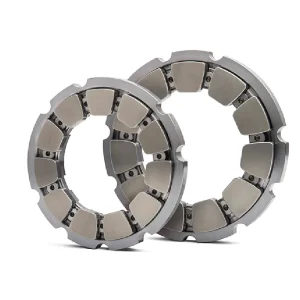
7 Proven Answers for What is a Plain Bearing Used For: A 2026 Buyer’s Guide
Abstract A plain bearing, in its most fundamental form, is a mechanical element designed to reduce friction between moving parts, providing support for linear, oscillating, or rotational motion. Unlike rolling-element bearings that utilize balls or rollers, a plain bearing functions through a sliding action between two surfaces. Its operation often relies on a layer of lubricant, such as oil or grease, to create a fluid film that separates the surfaces, a principle known as hydrodynamic lubrication. However, many modern variants are designed for dry-running conditions using self-lubricating materials like polymers or composites. These components are valued for their high load-carrying capacity, excellent shock resistance, simple design, and cost-effectiveness. Their applications […]
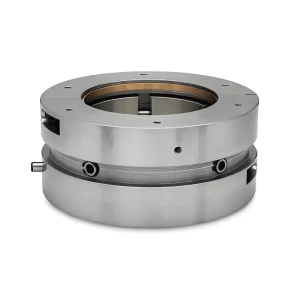
Where Are Plain Bearings Used?: An Expert Guide to 7 Key Industrial Applications in 2026
Abstract Plain bearings, often referred to as bushings or journal bearings, represent a fundamental category of mechanical components designed to facilitate motion between surfaces through a sliding action. Unlike rolling-element bearings that utilize balls or rollers to minimize friction, plain bearings function based on the principles of tribology, where the interaction of surfaces in relative motion is managed through material selection, lubrication, and geometric design. This comprehensive exploration examines the diverse and demanding environments where plain bearings are utilized. The analysis covers their critical function in high-load, low-speed applications, and situations involving oscillatory or intermittent motion. Key industrial sectors, including automotive, heavy construction, aerospace, agriculture, and power generation, are investigated […]
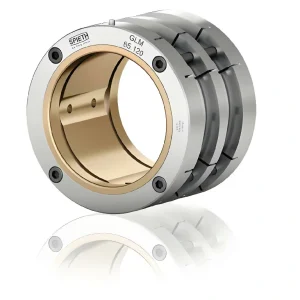
A Practical Buyer’s Guide for 2026: What is a Plain Bearing & 5 Key Selection Criteria
Abstract A plain bearing is a mechanical element engineered to support a load and reduce friction between moving parts through a sliding action. Unlike rolling-element bearings that utilize balls or rollers, a plain bearing's functionality relies on direct surface contact, often separated by a thin film of lubricant. These components, also known as bushings or journal bearings, consist of a stationary outer surface and a rotating or sliding inner surface. Their design simplicity belies a sophisticated interplay of material science, tribology, and fluid dynamics. They are particularly adept at handling high static and dynamic loads, including shock and vibration, making them suitable for demanding industrial environments. The performance of a […]
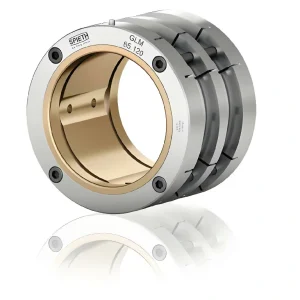
Expert Guide 2026: What Are Plain Bearings Made Of? 7 Key Material Types
Abstract Plain bearings, fundamentally simple in concept yet complex in material science, are constructed from a diverse spectrum of materials tailored to specific operational environments. The selection of a material is not arbitrary; it is a deliberate engineering decision that dictates the bearing's performance characteristics, including its load-bearing capacity, frictional properties, thermal resistance, wear life, and chemical inertness. An inquiry into what are plain bearings made of reveals a landscape of metals, polymers, composites, and ceramics. Metallic options like bronze and babbitt offer high strength, while advanced polymers such as PTFE and PEEK provide self-lubricating properties for maintenance-free operation. Composite bearings synergize these benefits, combining metal backings with polymer linings. […]

What Are Plain Bearings?: An Expert Guide to Types, Materials & 7 Industrial Uses
Abstract This article provides a comprehensive examination of plain bearings, exploring their fundamental principles, design variations, and material compositions. It delineates the core concept of plain bearings as components that facilitate motion through a sliding action, contrasting them with the rolling mechanism of ball and roller bearings. The analysis extends to the diverse family of plain bearings, including sleeve, flange, and thrust types, clarifying common terminologies like "bushing." A significant portion is dedicated to the materials used in their construction, from traditional metals like bronze to advanced self-lubricating polymers and composites, which have expanded their application range. The text investigates various lubrication regimes, such as hydrodynamic, hydrostatic, and boundary lubrication, […]
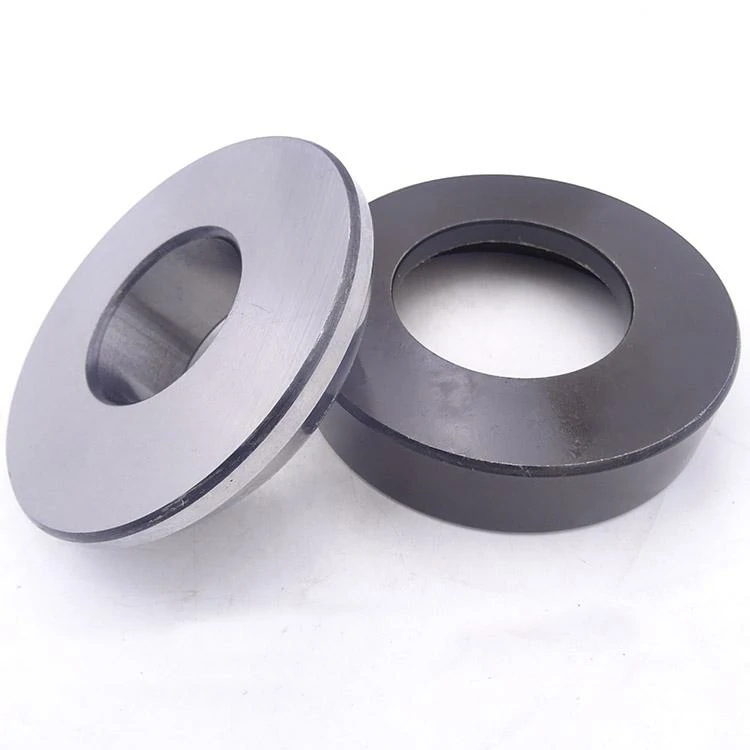
How Does a Plain Bearing Work, and Why Does It Still Matter in Modern Industry?
How does a plain bearing work, and why do so many industrial systems still rely on this seemingly simple component? At its core, a plain bearing works by allowing relative motion between two surfaces through controlled sliding rather than rolling, using a lubricating film or self-lubricating material to reduce friction and wear. For B2B buyers, engineers, and procurement managers, understanding this working principle is essential because plain bearings remain critical in applications where load capacity, compact design, reliability, and cost efficiency outweigh the need for high rotational speed. Understanding the Fundamental Principle of Plain Bearings Plain bearings are among the oldest mechanical components, yet their operating principle remains highly relevant. […]
-
Professional Bearing Solutions for You
標準サイズからカスタマイズ仕様まで、最高品質の製品と迅速な対応でお客様のプロジェクトをサポートいたします。
-
メッセージを残す
あなたのプライバシーを守ります
私たちは100%の機密性を保証します。お客様の情報が共有されたり、最高のサービスを提供する以外の目的で使用されたりすることは決してありません。