
 JA
JA  EN
EN  ES
ES  PT
PT  VI
VI  FR
FR  DE
DE  IT
IT  KO
KO  AR
AR  PL
PL  TR
TR  BG
BG  MS
MS  RU
RU 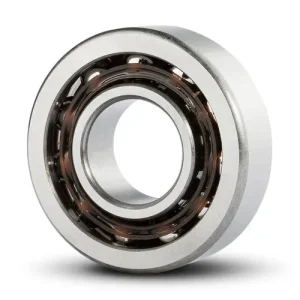
Abstract
Bearings are fundamental mechanical components engineered to manage friction and support loads between moving parts. Their primary function is to facilitate controlled motion, either rotational or linear, while constraining unwanted movement. This is achieved by providing low-friction surfaces for parts to roll or slide over, thereby transmitting forces efficiently and minimizing energy loss, heat generation, and wear. The examination of what a bearing is used for reveals its ubiquitous presence in nearly every machine with moving components, from complex industrial machinery and automotive powertrains to household appliances and precision medical devices. Different designs, such as rolling-element bearings (including ball and roller types) and plain bearings, are selected based on specific operational requirements like load magnitude and direction, rotational speed, precision, and environmental conditions. The proper selection and application of bearings are of profound importance for the reliability, efficiency, and lifespan of mechanical systems, making them an indispensable element of modern engineering.
Key Takeaways
- Reduce friction between moving machine parts to improve efficiency.
- Support and guide rotating shafts, axles, or wheels under load.
- Transfer forces between different components of a machine.
- Understanding what a bearing is used for helps select the correct type.
- Enable high-speed rotation while minimizing heat and energy consumption.
- Increase the operational life and reliability of mechanical systems.
Table of Contents
- The Fundamental Role of Bearings in Modern Mechanics
- A Taxonomy of Bearing Types and Their Functions
- Application in Industry 1: Automotive and Transportation
- Application in Industry 2: Heavy Manufacturing and Processing
- Application in Industry 3: Energy and Power Generation
- Application in Industry 4: Aerospace and Defense
- Application in Industry 5: Agriculture and Construction
- Application in Industry 6: Consumer Goods and Appliances
- Application in Industry 7: Medical Technology
- The Selection Process: Aligning Bearing Type with Application
- よくあるご質問
- Conclusion
- References
The Fundamental Role of Bearings in Modern Mechanics
To begin our inquiry into the function of bearings, we must first consider a world without them. Imagine trying to spin a heavy wagon wheel on a simple axle. The direct contact between the wood or metal surfaces would create immense friction. This resistance would make the wheel difficult to turn, generate a great deal of heat, and quickly wear down both the wheel's inner hole and the axle itself. The core purpose of a bearing is to solve this very problem. It is an intermediary, a sophisticated component designed to stand between moving parts and replace high-friction sliding contact with a low-friction interface.
Overcoming Friction: The Primary Mandate
At its heart, the question of what a bearing is used for is a question about the management of friction. Friction is the force that resists motion when one surface rubs against another. While sometimes useful, in most machinery, it represents a loss of energy, a source of wear, and a limitation on speed and performance. Bearings are humanity's most effective answer to this challenge. They introduce rolling elements, like balls or rollers, or a film of fluid between surfaces. Instead of two large surfaces grinding against each other, the motion is transferred through the rolling of these elements or the shear of the fluid layer. This transformation from sliding friction to rolling friction (or fluid friction) can reduce the energy required to sustain motion by orders of magnitude (SKF, 2024). Think of the difference between dragging a heavy box across the floor versus pushing the same box on a cart with wheels. The wheels act as a rudimentary form of bearing, dramatically lowering the effort needed.
Supporting and Guiding Loads
A bearing does not simply reduce friction; it must also carry the forces, or loads, acting upon the machine. These loads can be directed in different ways. A radial load acts perpendicularly to the axis of rotation, like the weight of a car pressing down on its axle. An axial load, or thrust load, acts parallel to the axis of rotation, like the force a propeller exerts on a ship's driveshaft. Many applications involve a combination of both. A bearing must be robust enough to support these loads without deforming or failing, all while continuing to allow for smooth rotation. Its internal geometry and material properties are carefully engineered to distribute these forces over a specific area, ensuring the machine remains stable and its components stay correctly aligned. The bearing essentially provides a rigid and reliable housing that guides the shaft or axle, preventing it from wobbling or moving out of position.
Enabling Constrained Motion: Rotation and Oscillation
The final piece of this foundational understanding is that bearings enable constrained motion. They permit movement in desired directions while preventing it in others. A wheel bearing, for instance, allows the wheel to rotate freely around the axle but prevents it from moving side-to-side or up-and-down relative to the suspension. This guidance is what provides precision in machinery. Without it, a drill bit would wander, a turbine shaft would vibrate uncontrollably, and a robotic arm could not perform a precise task. Bearings are the silent enablers of predictable, repeatable, and reliable mechanical motion, whether it is the continuous high-speed rotation of an electric motor or the slow, oscillating back-and-forth of a construction vehicle's arm.
A Taxonomy of Bearing Types and Their Functions
Having established the fundamental principles of why bearings are used, we can now explore the different forms they take. The vast world of bearings can be broadly categorized into two main families: rolling-element bearings and plain bearings. The choice between them is not arbitrary; it is dictated by the specific demands of the application, such as the magnitude of the load, the required speed, the need for precision, and the operating environment. Other specialized types, like 旋回リングベアリング, exist for more unique challenges.
Rolling-Element Bearings: The Workhorses
Rolling-element bearings are perhaps the most common type and are what many people picture when they think of a bearing. They consist of two rings, called races, which enclose a set of rolling elements—either balls or rollers. A cage, or separator, is typically used to keep these elements evenly spaced and prevent them from rubbing against each other. This design allows them to support loads with minimal friction.
ボールベアリング use spherical rolling elements. Because a sphere makes a very small, point-like contact with the flat races, ボールベアリング offer very low friction and are excellent for high-speed applications. However, this small contact area means they are generally suited for lighter to moderate loads. Deep-groove ball bearings are the most versatile and widely used type, capable of handling both radial and some axial loads.
ローラーベアリング, by contrast, use cylindrical, spherical, tapered, or needle-shaped elements. These shapes make line contact with the races instead of point contact. This larger contact area allows ローラーベアリング to support much heavier loads than ball bearings of a similar size. Tapered roller bearings, for example, are exceptionally good at handling large radial and axial loads, making them common in car wheel hubs and industrial gearboxes.
| Feature | Rolling-Element Bearing | プレーンベアリング |
|---|---|---|
| Friction | Very low, especially at startup | Higher, dependent on lubrication |
| Load Capacity | Moderate to very high | Very high to extreme |
| Speed Capability | High to very high | Low to moderate (special types can be high) |
| Precision | High | Moderate (can be high with fluid film) |
| Noise Level | Can be higher due to rolling elements | Generally very quiet |
| Maintenance | Requires proper lubrication | May be maintenance-free (self-lubricating) |
| Common Use | Electric motors, wheel hubs, gearboxes | Engine crankshafts, pivot points, high-load/low-speed applications |
Plain Bearings: Simplicity and Strength
A プレーンベアリング, sometimes called a bushing or journal bearing, is the simplest type of bearing. It has no moving parts and is essentially a sleeve placed around a shaft. The principle here is sliding contact, not rolling. To function properly, a thin film of lubricant—such as oil, grease, or a dry material like PTFE (Teflon)—must separate the shaft from the bearing surface. When the shaft rotates, it pulls this lubricant into a wedge-shaped gap, creating a high-pressure film that lifts the shaft and allows it to "float" with very little direct contact. This is known as hydrodynamic lubrication. For their simplicity, プレーンベアリング products are incredibly robust and can support immense loads. They are also quieter and more resistant to shock than rolling-element bearings. You will find them on the crankshaft of a car engine, in the pivot points of large construction equipment, and in other high-load, moderate-speed applications.
Specialized Bearings for Unique Demands
Beyond these two major families lie specialized bearings designed for specific tasks. 旋回リングベアリング are very large-diameter bearings designed to handle slow-turning, heavy loads, such as those found on cranes, excavators, and wind turbines. They often incorporate a gear into one of the races. リニアベアリング systems, on the other hand, are designed not for rotation but for motion along a straight path. They are fundamental to technologies like 3D printers, CNC machines, and robotic assembly lines, where precise linear positioning is paramount. Finally, a ベアリングユニット is a pre-assembled product that combines a bearing (often a ball bearing) with a housing. These units simplify installation, as they can be bolted directly onto a machine frame, and they often include seals and a means for re-lubrication, making them a convenient solution for conveyor systems and agricultural machinery.
| Application Area | Primary Challenge(s) | Common Bearing Solution(s) |
|---|---|---|
| Automotive Wheel Hub | High radial and axial loads, high speed, contamination | Tapered Roller Bearings, Angular Contact Ball Bearings |
| Electric Motor | Very high speed, low friction, low noise | 深溝玉軸受 |
| Industrial Gearbox | Very high loads (radial and axial), shock loads | Spherical Roller Bearings, Cylindrical Roller Bearings |
| Construction Excavator Arm Pivot | Extreme loads, low speed, shock, contamination | Spherical Plain Bearings, Cylindrical Roller Bearings |
| Wind Turbine Main Shaft | Massive loads, slow rotation, reliability | Spherical Roller Bearings, Tapered Roller Bearings |
| CNC Machine Guideway | High precision, smooth linear motion | Linear Bearing (Ball Bushing or Profile Rail Guides) |
Application in Industry 1: Automotive and Transportation
The automotive and transportation sector provides a powerful illustration of what a bearing is used for in our daily lives. A modern passenger car contains over 100 bearings, each performing a specific function that contributes to the vehicle's safety, efficiency, and comfort. From the wheels to the engine, bearings are the unseen components that keep the world moving.
Wheel Hubs and Powertrains
Perhaps the most obvious application is in the wheel hubs. Here, bearings must support the entire weight of the vehicle (a radial load) while also handling the forces of cornering (an axial load). Tapered roller bearings or specialized angular contact ball bearing units are commonly used. They allow the wheels to spin with minimal resistance, which directly impacts fuel efficiency. Without effective wheel bearings, the friction would generate enormous heat, leading to rapid failure and a potential loss of control. Within the powertrain, bearings are just as vital. In the transmission, they support the rotating shafts and gears, allowing for smooth gear changes. In the engine, plain bearings support the crankshaft as it converts the linear motion of the pistons into rotation, while smaller rolling bearings are used in accessories like the alternator and water pump.
Steering and Suspension Systems
Beyond forward motion, bearings enable control and comfort. The steering column contains bearings that allow the steering wheel to turn smoothly. In the suspension system, bearings are used at pivot points where the control arms connect to the chassis. These bearings, often a type of plain bearing or bushing, allow the suspension to move up and down in response to bumps in the road, isolating the vehicle's body from the harshness of the road surface. Even the seat adjustment mechanisms in a car often use small linear or roller bearings to allow for smooth fore and aft movement. Every time a driver turns a corner, shifts a gear, or drives over a pothole, they are relying on the silent, steady work of dozens of bearings.
Application in Industry 2: Heavy Manufacturing and Processing
In the demanding world of heavy industry, such as steel mills, paper manufacturing, and mining, machinery operates under some of the most extreme conditions imaginable. Massive loads, high temperatures, constant vibration, and heavy contamination are the norm. In this environment, the question of what a bearing is used for is a matter of operational survival and productivity. The failure of a single bearing can bring an entire production line to a halt, costing a company thousands of dollars per minute in lost output.
Conveyor Systems and Material Handling
Imagine a mining operation where tons of ore must be transported from deep within the earth to a processing plant. This is accomplished using vast networks of conveyor belts, some stretching for several kilometers. Each of the thousands of rollers, or idlers, that support the belt relies on a set of bearings, typically deep groove ball bearings. These bearings must operate continuously, often 24 hours a day, in a dusty, dirty, and often wet environment. They must be sealed effectively to prevent contaminants from entering and causing premature wear. The efficiency of the entire conveyor system, and thus the mine's productivity, is directly tied to the performance and reliability of these countless bearings.
Rolling Mills and High-Load Machinery
In a steel mill, massive bearings are used in the rolling stands that shape red-hot slabs of steel into thin sheets or structural beams. These bearings, often large spherical or cylindrical roller bearings, must withstand colossal radial loads, extreme temperatures, and powerful shock forces as the metal enters the rollers. The precision of these bearings is also of profound importance, as it determines the final thickness and quality of the steel product. Similarly, in a paper mill, large bearings support the heavy rollers that press water from pulp and dry it into paper. These operate in a hot, humid environment and must run at high speeds with exceptional reliability. In these heavy industrial settings, specialized bearings with robust designs, advanced materials, and sophisticated sealing and lubrication systems are not a luxury; they are a fundamental requirement for operation.
Application in Industry 3: Energy and Power Generation
The generation of electricity, the lifeblood of modern civilization, is fundamentally a process of converting mechanical rotation into electrical energy. This process is entirely dependent on bearings to support and guide the massive rotating components involved. From traditional power plants to renewable energy sources, bearings are at the very core of our power grid.
Wind Turbine Main Shafts and Gearboxes
A modern wind turbine is a marvel of mechanical engineering, and its operation hinges on several sets of large, high-capacity bearings. The main shaft, which connects the rotor blades to the gearbox, is supported by a pair of massive bearings, typically spherical or tapered roller bearings. These must support the immense weight of the rotor assembly and handle the highly variable and gusting loads from the wind. Inside the gearbox, a complex arrangement of roller bearings is used to increase the slow rotation of the blades (around 15-20 rpm) to the high speed required by the generator (over 1,500 rpm). The reliability of these bearings is a major focus for the wind industry, as replacing a bearing at the top of a 100-meter tower is a complex and expensive operation.
Electric Motors and Generators
Whether powered by wind, steam, or gas, a generator works by spinning a rotor within a magnetic field. The shaft of this rotor is supported at both ends by bearings. In smaller generators and electric motors, these are often standard deep groove ball bearings, chosen for their low friction and high-speed capabilities (SKF Marketing Support Centre, 2021). In large, power-plant-scale generators, the loads are much greater, often requiring the use of cylindrical roller bearings or specialized plain bearings (journal bearings) that operate on a film of pressurized oil. The efficiency of the motor or generator is directly impacted by the friction in these bearings. Reducing this friction, even by a small amount, can result in significant energy savings when scaled across an entire power grid or an industrial plant with thousands of motors. The entire field of electromechanical conversion is a direct application answering the question of what a bearing is used for.
Application in Industry 4: Aerospace and Defense
In the aerospace industry, the demands placed on mechanical components are pushed to their absolute limits. Components must be incredibly strong yet lightweight, operate across a vast range of temperatures and altitudes, and exhibit near-perfect reliability, as failure can have catastrophic consequences. Aerospace bearings are highly specialized components, often made from exotic materials and manufactured to the highest possible precision.
Gas Turbine Engines
A jet engine is one of the most demanding environments for a bearing. The main shaft of a gas turbine engine, which holds the compressor and turbine disks, rotates at tens of thousands of revolutions per minute. The bearings that support this shaft must handle significant loads and operate at temperatures that can exceed 500°C. Standard bearing steels would lose their hardness at these temperatures. Consequently, engine main-shaft bearings are typically made from special high-temperature tool steels or even advanced ceramics. They are usually angular contact ball bearings or cylindrical roller bearings, arranged to accommodate the high speeds and thermal expansion of the shaft. They are lubricated by a continuously circulating and cooled jet of oil, representing a complete, self-contained life support system for the bearing.
Flight Control Actuators
Every time a pilot moves the controls to adjust the ailerons, elevators, or rudder of an aircraft, they are activating a series of flight control actuators. These devices, which can be hydraulic, electric, or fly-by-wire, translate the pilot's commands into physical movement of the control surfaces. These actuators are filled with bearings—spherical plain bearings at pivot points, needle roller bearings in gear mechanisms, and ball screws (a type of linear bearing) to create linear motion. These bearings must operate with high precision and no "slop" or free play, ensuring that the aircraft responds instantly and predictably to the pilot's inputs. They must also be incredibly reliable, as a failure in a primary flight control system could be disastrous.
Application in Industry 5: Agriculture and Construction
The machinery used in agriculture and construction operates in some of the harshest conditions on Earth. Equipment like tractors, combines, and excavators must endure dirt, mud, water, shock loads, and long periods of intense use. The bearings in these machines are designed for toughness and durability above all else. Understanding what a bearing is used for in this context is to understand the need for robust, well-sealed, and easily maintainable components.
Heavy Equipment Pivot Points
Consider the arm of a large hydraulic excavator. Every joint—where the boom connects to the machine, where the stick connects to the boom, and where the bucket connects to the stick—is a pivot point that relies on a bearing. These are typically large spherical plain bearings or hardened steel bushings. They must withstand immense, pounding shock loads as the excavator digs into hard ground or rock. They operate at low speeds but under extreme pressure. They must also be sealed effectively to keep abrasive dirt and moisture out, which would otherwise quickly destroy the bearing surfaces. The ability of these massive machines to perform their work is directly dependent on the strength and durability of these pivot bearings.
Implements and Attachments
Agricultural machinery, from plows and disc harrows to planters and combine harvesters, is filled with rotating components that require bearings. The disc blades of a harrow, which cut through the soil, rotate on sets of tapered roller bearings housed in a sealed unit. The rotating shafts within a combine harvester that thresh and separate grain are supported by a variety of ball and roller bearings. For these applications, the ベアリングユニット is an extremely common solution. These pre-assembled units, which consist of a bearing mounted in a cast-iron or pressed-steel housing, can be easily bolted to the machine's frame. They typically feature robust seals and are designed for easy re-lubrication with a grease gun, simplifying maintenance for farmers in the field.
Application in Industry 6: Consumer Goods and Appliances
While often associated with heavy industry and transport, the principles of bearing function are just as relevant in the devices we use every day in our homes. The quiet, smooth operation of our household appliances is a testament to the small, efficient bearings working inside them. They contribute to the energy efficiency, low noise levels, and long life that we expect from modern consumer goods.
Small Motors and Rotating Drums
Nearly any appliance with a motor uses bearings to support the motor's shaft. In a vacuum cleaner, a pair of small, high-speed ball bearings allows the motor's armature to spin at up to 30,000 rpm, creating the suction we rely on. In a washing machine, a set of large, robust ball bearings supports the drum, allowing it to spin quietly and smoothly while handling the unbalanced loads of wet clothes. The quality of these bearings directly impacts the noise level of the appliance and its overall lifespan. A failing washing machine bearing is often identified by a loud rumbling or grinding noise during the spin cycle. Similarly, the fans in our computers, the spindles in our hard drives (in older models), and the blades in our kitchen blenders all rotate on small, precise bearings.
Application in Industry 7: Medical Technology
In the field of medical technology, the requirements for bearings shift towards extreme precision, cleanliness, and specialized materials. Here, the question of what a bearing is used for is often about enabling smooth, controlled motion in sensitive diagnostic equipment and surgical tools, where even the slightest vibration or imprecision is unacceptable.
Precision Instruments and Diagnostic Equipment
Large diagnostic machines like CT scanners and MRI machines rely on bearings. In a CT scanner, the entire gantry, which houses the X-ray source and detectors, rotates at high speed around the patient. This rotation is facilitated by a large, custom-designed precision bearing that must provide exceptionally smooth and quiet motion to ensure clear image quality. In the realm of surgical tools, miniature bearings are used in drills and saws for orthopedic surgery. These bearings must be made of materials that can withstand the high temperatures and harsh chemicals of the sterilization process (autoclaving), such as specialized stainless steels or even ceramics. They allow the tools to operate at high speeds with minimal vibration, giving the surgeon maximum control.
The Selection Process: Aligning Bearing Type with Application
The preceding exploration of industries demonstrates that there is no single "best" bearing. The optimal choice is always a function of the specific application's demands. The process of selecting a bearing is a careful engineering exercise that involves balancing performance, cost, and reliability. This process begins with a thorough analysis of the operating conditions (Schaeffler KG, 2009).
Analyzing Loads, Speeds, and Environmental Conditions
The first step in selection is to quantify the demands. What are the loads? Are they primarily radial, axial, or a combination? Are they steady, or do they involve shock and vibration? Roller bearings are generally favored for heavy loads, while ball bearings are suitable for lighter loads. What are the speeds? Ball bearings excel at high speeds, while many plain bearings are better suited for lower speeds. What is the required operational life? The life of a rolling-element bearing can be statistically calculated based on the load and speed. What are the environmental conditions? High temperatures may necessitate special materials or lubricants. The presence of contaminants like dirt or water requires robust sealing solutions. The need for high precision, such as in a machine tool spindle, will point toward specific types like angular contact ball bearings.
The Importance of Lubrication and Maintenance
A bearing cannot function properly without adequate lubrication. The lubricant serves several purposes: it separates the moving surfaces to reduce friction and wear, it helps to dissipate heat, and it can help protect the bearing surfaces from corrosion. The choice between grease and oil is a key decision. Grease is simpler to apply and tends to stay in place, making it suitable for many "sealed-for-life" applications. Oil can be circulated, filtered, and cooled, making it better for very high-speed or high-temperature applications. A comprehensive maintenance strategy, including periodic re-lubrication and condition monitoring (analyzing vibration and temperature), is essential for maximizing the life of critical bearings in industrial settings (NSK Ltd., 2024). A high-quality ベアリングユニット often simplifies this by integrating seals and lubrication points into its design.
よくあるご質問
What are the two main types of bearings?
The two primary categories are rolling-element bearings and plain bearings. Rolling-element bearings, like ball or roller bearings, use rolling elements to reduce friction. Plain bearings consist of a sleeve or surface on which a shaft slides, typically separated by a film of lubricant.
Why do bearings fail?
Bearings can fail for several reasons, but the most common causes are inadequate lubrication (too little, too much, or the wrong type), contamination from dirt or moisture, improper installation (mounting), and overloading or operating the bearing beyond its design limits.
What is the difference between a ball bearing and a roller bearing?
The primary difference lies in the shape of the rolling element. Ball bearings use spheres, which make point contact with the races, allowing for very high speeds but supporting lighter loads. Roller bearings use cylinders, tapers, or other shapes that make line contact, enabling them to support much heavier loads but at generally lower speeds.
Can a bearing operate without lubrication?
Most bearings cannot. Lubrication is essential to create a separating film between moving parts to minimize friction and wear. However, some specialized plain bearings are made from self-lubricating materials (like certain plastics or composites) and can operate dry in low-load, low-speed applications.
What is an axial load versus a radial load?
A radial load acts perpendicularly to the shaft's axis, like the weight of a vehicle on an axle. An axial load (or thrust load) acts parallel to the shaft's axis, like the force pushing a drill bit forward. Some bearings are designed for radial loads, some for axial loads, and many (like angular contact ball bearings) are designed to handle a combination of both.
How do I know if a bearing is going bad?
Common signs of a failing bearing include unusual noises like grinding, squealing, or rumbling. Other indicators are an increase in vibration or a noticeable rise in temperature in the area around the bearing.
What are slewing ring bearings used for?
Slewing ring bearings are very large-diameter bearings designed to handle heavy, slow-turning or oscillating loads. They are commonly found on cranes, excavators, wind turbines, and radar antennas, where they support the rotating superstructure.
What makes a linear bearing different?
Unlike most bearings that facilitate rotation, a linear bearing is designed to allow for smooth, precise motion along a straight line. They are fundamental components in machinery like 3D printers, CNC routers, and automated assembly lines where precise linear positioning is required.
Conclusion
The examination of what a bearing is used for reveals a component that is fundamental to the very concept of motion in modern technology. From the microscopic bearings in a wristwatch to the multi-ton bearings in a wind turbine, their function remains consistent: to conquer friction, support forces, and guide movement with precision and reliability. They are not merely passive components; they are active enablers of efficiency, speed, and longevity in mechanical systems. By transforming high-friction sliding into low-friction rolling or fluid shearing, bearings have made possible the high-speed engines, heavy-lifting machinery, and precision instruments that define our world. A deep appreciation for their design, function, and application is an appreciation for the elegant and foundational principles of mechanical engineering that quietly and consistently empower our technological society.
References
NSK Ltd. (2024). ROLLING BEARINGS for INDUSTRIAL MACHINERY. NSK. https://www.nsk.com/content/dam/nsk/common/catalogs/ctrgPdf/bearings/e1103c_parta.pdf
Schaeffler KG. (2009). A Brief Introduction to Rolling Bearings. Schaeffler.
SKF. (2024). Bearing basics. SKF Group.
SKF Marketing Support Centre. (2021). Rolling bearings in electric motors and generators. SKF.