
 TR
TR  EN
EN  ES
ES  PT
PT  VI
VI  FR
FR  DE
DE  IT
IT  JA
JA  KO
KO  AR
AR  PL
PL  BG
BG  MS
MS  RU
RU 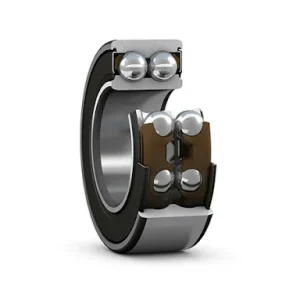
Özet
The selection and verification of rolling bearings represent a foundational concern for the operational integrity and longevity of industrial machinery. This document examines the specific case of FAG bearings, a prominent brand within the Schaeffler Group, to articulate a comprehensive methodology for their proper selection and authentication. It investigates the critical parameters of application analysis, including load, speed, and environmental conditions, as a prerequisite for navigating the extensive FAG product portfolio. The analysis extends to the intricate system of FAG part number designations and suffixes, which convey vital information about a bearing's internal design, materials, and capabilities. A significant portion of the inquiry is dedicated to the pervasive issue of counterfeit components, outlining a multi-faceted strategy for verifying authenticity through packaging, product markings, and authorized supply chains. The discourse culminates in an exploration of best practices for installation, lubrication, and maintenance, positing these as inseparable from the initial selection process in achieving optimal performance and reliability in demanding industrial contexts.
Önemli Çıkarımlar
- Analyze your application's load, speed, and environment before selecting a bearing.
- Match your operational needs to the correct FAG ball, roller, or plain bearing type.
- Understand FAG part numbers and suffixes to specify the exact component you need.
- Always verify the authenticity of FAG Bearings through packaging and official channels.
- Proper installation and lubrication are as vital as the bearing selection itself.
- Source components from authorized distributors to guarantee quality and support.
- Consult detailed product guides to understand the breadth of available solutions.
İçindekiler
- 1. Demystifying Your Application's Demands
- 2. Navigating the FAG Bearing Portfolio
- 3. Deciphering FAG Designations and Standards
- 4. The Unwavering Quest for Authenticity
- 5. Ensuring Longevity: Proper Installation and Maintenance
- Frequently Asked Questions (FAQ)
- Sonuç
- Referanslar
1. Demystifying Your Application's Demands
The endeavor to select a bearing is not merely a transactional choice of a component from a catalog. It is an act of interpretation, a deep reading of a machine's needs and the environment in which it is destined to function. A machine, in this sense, communicates its requirements through the language of physics—forces, velocities, temperatures, and contaminants. To ignore this language is to risk a fundamental misunderstanding that can lead to premature failure, costly downtime, and even catastrophic damage. The first point in our considered checklist, therefore, is an empathetic and rigorous analysis of the application's specific demands. We must become fluent in the narrative of our machinery before we can prescribe the correct solution. This requires a shift in perspective from seeing a bearing as a simple commodity to understanding it as a critical, dynamic interface between stationary and rotating parts, a nexus of immense physical stress.
Understanding Load: Radial, Axial, and Combined Forces
At the heart of any bearing's function is its capacity to manage force. These forces, or loads, are seldom simple or unidirectional. Imagine a conveyor belt system in a mine in South Africa. The weight of the ore on the belt exerts a downward force on the rollers. This is a radial load, acting perpendicularly to the shaft's axis of rotation. Now, consider a vertical pump shaft, where the weight of the impeller and the fluid pressure create a downward thrust along the axis of the shaft. This is a pure axial load.
In reality, most applications, from wind turbine gearboxes buffeted by gusting winds to the wheel hubs of heavy-duty trucks navigating the varied terrains of the Middle East, experience a combined load—a mixture of both radial and axial forces. The character, magnitude, and direction of these loads dictate the fundamental geometry of the bearing required.
A deep groove ball bearing, for instance, is a versatile performer, capable of handling moderate radial loads and some axial load in either direction. Yet, if the axial load becomes the dominant force, a different architecture is needed. An angular contact ball bearing, with its offset raceways, is purposefully designed to accommodate significant combined loads. For extremely heavy axial loads, such as those in the swivel mechanisms of large cranes, a thrust bearing is the only appropriate choice. Misapplying a bearing designed for radial loads in a high-axial-load environment is akin to asking a sprinter to lift a weightlifter's barbell; the structure is simply not designed for that type of stress and will fail. A careful calculation or, at minimum, a well-reasoned estimation of the static and dynamic loads is the first and most foundational step in this entire process.
Speed and Rotational Requirements
Following the consideration of load, we must turn our attention to speed. The rotational velocity of the shaft profoundly influences the type of bearing that can be used and the internal design features it must possess. Speed is not a benign parameter; as rotational velocity increases, so do centrifugal forces acting on the rolling elements and the cage that separates them. Frictional heat generation also rises exponentially with speed.
A useful concept here is the speed rating or limiting speed, a value provided by manufacturers like Schaeffler for their FAG bearings. This is not an absolute limit but a reference value based on thermal equilibrium under specific load and lubrication conditions. Exceeding this speed without careful consideration of lubrication methods, internal clearance, and cage material can lead to a rapid thermal runaway, lubricant breakdown, and seizure of the bearing.
For instance, high-speed applications like machine tool spindles or electric motors demand bearings with specific attributes. They often utilize smaller rolling elements to reduce inertial forces, employ lightweight and stable cage materials like polyamide or phenolic resin, and require higher-precision manufacturing (P4, P2 tolerance classes) to minimize vibration. In contrast, a slow-moving, heavily loaded application like a construction crane's slewing ring bearing prioritizes load capacity over speed, employing large, robust rolling elements. The choice between a grease-lubricated bearing and an oil-bath or oil-jet system is also heavily dependent on the operational speed. Grease is sufficient for a vast range of moderate-speed applications, but as speeds climb into the hundreds of thousands of RPMs, only circulating oil can provide the necessary cooling and lubrication.
Environmental Factors: Temperature, Contamination, and Lubrication
A bearing does not exist in a vacuum. It operates within a specific, and often hostile, environment. The ambient temperature, the potential for ingress of dust or moisture, and the presence of corrosive chemicals all exert a powerful influence on a bearing's performance and lifespan.
Consider the temperature range. A bearing operating in a steel mill in Russia might be subjected to extreme heat conducted through the shaft, while equipment used in food processing in Southeast Asia must endure frequent hot water washdowns. These thermal challenges affect everything. The internal clearance of the bearing must be selected to accommodate thermal expansion of the shaft and housing; a standard clearance might vanish at high temperatures, causing the bearing to seize. Lubricant viscosity is highly sensitive to temperature; a grease that is perfect at 25°C may become too thin to form a protective film at 120°C or too stiff to function at -40°C. High temperatures also accelerate the aging of the lubricant and can compromise the integrity of seal materials. FAG bearings are available with various special heat treatments and materials for such conditions.
Contamination is the silent killer of bearings. Even microscopic hard particles can dent the exquisitely smooth surfaces of the raceways and rolling elements. These dents create stress risers that become the initiation points for fatigue spalling, drastically shortening the bearing's life. Water or chemical ingress can corrode surfaces and degrade the lubricant. The choice of sealing solution is therefore not an afterthought but an integral part of the bearing selection. For moderately dusty environments, a non-contact shield (Z or 2Z suffix) may suffice. For wet or very dirty conditions, a contact seal (RSR or 2RSR suffix) made from nitrile or Viton rubber provides a much more robust barrier. In the most extreme cases, the entire bearing unit might be housed within a specialized enclosure with additional external seals.
2. Navigating the FAG Bearing Portfolio
With a clear understanding of the application's demands, we can now turn our attention to the vast and varied world of FAG bearings themselves. To the uninitiated, a catalog of bearing products can appear as an undifferentiated and overwhelming collection of rings, balls, and rollers. However, this diversity is not arbitrary. Each category, each series, and each design variation represents a specific solution to a particular engineering problem. It is a library of mechanical answers waiting for the right questions. The task is to match the questions we formulated in our application analysis—about load, speed, and environment—to the correct answer within the FAG portfolio. This involves recognizing the fundamental capabilities and limitations of the main bearing families. Much like a biologist classifies organisms based on shared characteristics, an engineer must learn to classify bearings by their internal geometry and resulting performance traits.
The World of Ball Bearings: From Deep Groove to Angular Contact
Ball bearings are perhaps the most recognizable and widely used type of rolling bearing, characterized by their use of spherical rolling elements. Their primary strength lies in their low friction and high-speed capability, making them a default choice for a multitude of applications.
The most common variant is the Deep Groove Ball Bearing. Imagine a marble rolling in a perfectly matched U-shaped channel. The close conformity between the ball and the deep raceway groove allows this bearing to support significant radial loads, as well as moderate axial loads in both directions. This versatility makes them ubiquitous, found in everything from electric motors and household appliances to automotive gearboxes.
However, when the axial load component becomes more pronounced, the Angular Contact Ball Bearing comes into its own. In these bearings, the raceways in the inner and outer rings are offset relative to each other. This creates a "contact angle" through which the load is transmitted. This design makes them ideal for supporting combined loads. They are typically mounted in pairs (back-to-back, face-to-face, or in tandem) to handle axial loads in both directions and to provide a very stiff and precise shaft guidance system. This is why they are the bearing of choice for high-precision applications like machine tool spindles, where any deflection can compromise the accuracy of the finished workpiece.
Other specialized ball bearings exist, such as Self-Aligning Ball Bearings, which have two rows of balls and a common sphered raceway in the outer ring. This allows them to tolerate minor angular misalignment between the shaft and housing, a common issue in long shafts or fabricated frames. Thrust Ball Bearings are designed exclusively for axial loads and cannot support any significant radial load.
The Power of Roller Bearings: Cylindrical, Spherical, and Tapered
When the primary demand is for high load-carrying capacity, the conversation shifts from ball bearings to roller bearings. The fundamental difference lies in the nature of the contact between the rolling element and the raceway. A ball makes a theoretical point contact, which spreads into a small elliptical area under load. A roller, by contrast, makes a line contact. This much larger contact area allows roller bearings to support significantly heavier loads than a ball bearing of the same size.
Cylindrical Roller Bearings offer very high radial load capacity and are also suitable for high-speed applications due to the low friction generated by the line contact geometry. However, in their standard form, they can accommodate little to no axial load. Their design often allows for the inner and outer rings to be separated, which can greatly simplify the mounting and dismounting process.
For applications involving very heavy loads combined with misalignment, the Spherical Roller Bearing is the undisputed champion. These robust bearings feature two rows of barrel-shaped rollers and a common sphered raceway on the outer ring, similar to their self-aligning ball bearing cousins. This internal geometry allows them to accommodate heavy radial loads, significant axial loads in both directions, and substantial misalignment without compromising their lifespan. You will find them in the most demanding environments imaginable: mining crushers, paper mill rollers, and large industrial gearboxes.
Tapered Roller Bearings represent a unique and highly effective solution for managing large combined loads. Their tapered rollers and raceways create a design where the projections of the contact lines all meet at a common point on the bearing axis. This enables them to handle powerful radial and axial forces simultaneously. Like angular contact ball bearings, they are typically mounted in pairs to provide robust shaft support, making them a mainstay in automotive wheel hubs, axle systems, and gearbox outputs.
| Bearing Type | Radial Load | Axial Load | Hız | Yanlış Hizalama Toleransı |
|---|---|---|---|---|
| Deep Groove Ball | Good | Moderate | Very High | Low |
| Açısal Temaslı Bilyalı | Good | Çok iyi | Yüksek | Çok Düşük |
| Silindirik Makara | Mükemmel | Çok Düşük | Yüksek | Çok Düşük |
| Küresel Makara | Mükemmel | Good | Moderate | Yüksek |
| Konik Makaralı | Mükemmel | Mükemmel | Moderate | Low |
Özel Çözümler: Kaymalı Rulmanlar, Döner Halkalar ve Lineer Sistemler
FAG, bilyalı ve makaralı rulmanların yaygın kategorilerinin ötesinde, benzersiz zorluklar için tasarlanmış bir dizi özel ürün sunar. Kaymalı Rulmanlar veya burçlar, tamamen farklı bir prensiple çalışır. Yuvarlanma elemanlarından yoksundurlar ve bunun yerine, genellikle bir yağlayıcı filmi ile ayrılmış veya kompozit polimerler veya sinterlenmiş bronz gibi kendinden yağlamalı malzemelerden yapılmış iki yüzey arasındaki kayma hareketine dayanırlar. ELGES kaymalı yataklar gibi FAG'ın ürün yelpazesi, inşaat makinelerindeki pivot noktaları veya hidrolik silindir uçları gibi yavaş, salınımlı hareketlere ve çok ağır yüklere sahip uygulamalarda kullanılır.
Döner Halka Rulmanlar, büyük eğilme momentleri de dahil olmak üzere muazzam birleşik yükleri desteklerken yavaş dönme veya çevirme hareketlerini idare etmek için tasarlanmış büyük çaplı rulmanlardır. Esasen bir vincin, ekskavatörün veya rüzgar türbininin üst yapısının tabanına göre dönmesini sağlayan bileşendir. Genellikle iç veya dış halkalarında dişli dişleri bulunur ve tahrik mekanizmasını rulmanın kendisine entegre ederler.
Lineer kılavuzlar ve vidalı mil sürücüleri de dahil olmak üzere Lineer Rulman sistemleri, bir eksen etrafında hareket etmek yerine düz bir yol boyunca hareketi kolaylaştırır. Bunlar, doğru ve tekrarlanabilir konumlandırmanın çok önemli olduğu CNC makinelerinde, 3D yazıcılarda ve robotik montaj hatlarında bulunan hassas otomasyonun temelidir. Saygın bir üretici tarafından sunulan portföy gibi bir üreticinin portföyünü keşfetmek rulman şi̇rketi̇mevcut mühendislik çözümlerinin ne kadar geniş olduğunu ortaya koymaktadır.
3. Deciphering FAG Designations and Standards
Uygulamamız için uygun rulman tipini belirledikten sonra, spesifikliğin arttığı bir aşamaya giriyoruz. Bir "sabit bilyalı rulman" istemek yeterli değildir; tam boyutlarını, iç özelliklerini ve malzeme özelliklerini belirtmeliyiz. Bu, standartlaştırılmış bir parça numarası ve son ekler sistemiyle gerçekleştirilir. Bu isimlendirme keyfi bir kod değil, rulmanın kesin kimliğini ileten yoğun ve mantıklı bir dildir. Bu dili okumayı öğrenmek her mühendis, teknisyen veya satın alma uzmanı için vazgeçilmez bir beceridir. Kavramsal bir gereksinim ile fiziksel, sipariş edilebilir bir bileşen arasındaki köprüdür. Her karakterin ve her son ekin bir anlamı vardır ve buradaki bir yanlış anlama, boyutsal olarak doğru ancak eldeki görev için işlevsel olarak uygun olmayan bir rulmanın sipariş edilmesine neden olabilir.
Bir FAG Parça Numarasının Anatomisi
Bir FAG rulman tanımlamasının özü, tipik olarak temel özelliklerini tanımlayan bir dizi sayıdır: rulman tipi ve boyutları. Büyük ölçüde ISO altında standartlaştırılmış olan sistem parçalara ayrılabilir.
Örnek olarak yaygın bir FAG rulman parça numarasını ele alalım: 6205.
- 6: Bu ilk rakam rulman tipini tanımlar. Bu durumda, '6' tek sıralı sabit bilyalı rulman anlamına gelir. Bir '2' oynak makaralı rulmanı, bir '3' konik makaralı rulmanı ve bir 'N' silindirik makaralı rulmanı gösterebilir.
- 2: İkinci rakam boyut serisi ile ilgilidir. Belirli bir delik boyutu için rulmanın göreceli sağlamlığını gösterir. A '2' veya '3' serisi (örn. 62xx, 63xx), kapasite ve boyut arasında iyi bir denge sunan standart bir hafif veya orta seridir. Bir '0' veya '1' serisi daha hafif olurken, bir '4' serisi daha ağır olacaktır.
- 05: Son iki hane delik boyutunu temsil eder. Milimetre cinsinden delik çapını elde etmek için 20 mm'den 480 mm'ye kadar olan delik boyutları için bu iki basamaklı sayıyı 5 ile çarparsınız. Yani, '05' 5 x 5 = 25 mm'lik bir delik boyutu anlamına gelir. Daha küçük boyutlar için istisnalar vardır: '00' 10 mm, '01' 12 mm, '02' 15 mm ve '03' 17 mm'dir.
Yani, "6205", 25 mm'lik bir deliğe sahip hafif-orta serinin tek sıralı bir sabit bilyalı rulmanıdır. Bu temel tanımlama en önemli üç bilgiyi sağlar: tip, seri ve boyut.
Sonekleri Anlama: Kafesler, Açıklıklar ve Özel Özellikler
Temel parça numarası hikayenin sadece başlangıcıdır. Gerçek özgüllük, takip eden son eklerden gelir. Bu son ekler rulmanın'iç yapısını, hassasiyetini, boşluğunu ve diğer özel özelliklerini detaylandırır. Bunlar, genel bir bileşeni özel bir bileşene dönüştüren ince baskılardır.
- Kafesler (Rehberlik): Kafes veya tutucu, birbirlerine sürtünmelerini önlemek için yuvarlanma elemanlarını ayıran bileşendir. Standart kafes genellikle preslenmiş çeliktir (son ek veya J yoktur), ancak son ekler varyasyonları gösterir. 'M' veya 'MA' genellikle daha sağlam ve yüksek hızlar ve titreşim için uygun olan işlenmiş bir pirinç kafesi belirtir. 'TVP' veya 'T' hafif, iyi kayma özelliklerine sahip ve yüksek hızlı uygulamalarda yaygın olan cam elyaf takviyeli poliamidden yapılmış bir kafesi belirtir.
- Mühürler ve Kalkanlar (Koruma): Çevresel faktörlerden bahsettik ve son ekler korumayı tanımlar. '2Z' veya 'ZZ' rulmanın her iki tarafında da metal bir kalkan bulunduğu anlamına gelir ve katı kirleticilere karşı ek sürtünme olmadan iyi koruma sağlar. #39;2RSR' veya '2RS1' her iki tarafta da genellikle nitril kauçuktan (NBR) yapılmış, az miktarda dönme sürtünmesi eklemesine rağmen hem toza hem de neme karşı mükemmel koruma sağlayan temas contalarını ifade eder.
- İç Boşluk (Operasyonel Uygunluk): Bu, bir halkanın diğerine göre hareket edebileceği toplam mesafenin bir ölçüsüdür. Hayati bir parametredir. 'CN' (veya son ek yok) Normal boşluktur. 'C3' normalden daha büyük bir boşluğu gösterir ve 'C4' daha da büyüktür. Bu daha büyük boşluklar, montaj sırasında sıkı bir girişim uyumunun olduğu veya iç ve dış bilezikler arasında önemli bir sıcaklık farkının olacağı ve boşluğu "kullanan" genleşmeye neden olan uygulamalarda gereklidir. C3 gereken yerlerde CN rulman kullanılması hızlı arızalara yol açacaktır.
- Hassasiyet (Tolerans): Standart tolerans sınıfı P0'dır (son ek yok). Daha yüksek çalışma hassasiyeti ve hız kapasitesi gerektiren uygulamalar için 'P6' ve 'P5' gibi daha yüksek hassasiyet sınıfları mevcuttur.
| Sonek | Anlamı | Tipik Uygulama |
|---|---|---|
| 2Z / ZZ | Her iki tarafta kalkan | Orta derecede temiz ortamlar, elektrik motorları |
| 2RSR / 2RS | Her iki tarafta temas contası | Tarım makineleri, konveyörler, ıslak/tozlu koşullar |
| M / MA | İşlenmiş pirinç kafes | Yüksek titreşim, yüksek hız, büyük rulmanlar |
| TVP / T | Poliamid kafes | Yüksek hızlı uygulamalar, düşük sürtünme gereksinimleri |
| C3 | İç boşluk Normalden büyük | Elektrik motorları, sıkı geçme veya yüksek ısı uygulamaları |
| C4 | Internal clearance greater than C3 | High-speed, high-temperature applications, vibrating screens |
| P6 | Increased running accuracy | Machine tool spindles, applications needing precision |
Thus, a bearing designated 6205-2RSR-C3 is a deep groove ball bearing with a 25 mm bore, fitted with contact seals on both sides, and featuring an internal clearance greater than normal. This full designation provides a complete and unambiguous specification.
Material and Heat Treatment Specifications
For the most extreme applications, standard bearing steel (typically a high-purity, through-hardened chromium steel like 100Cr6) may not be sufficient. Suffixes can also denote special materials or heat treatments. For example, bearings may be made from stainless steel (a prefix or suffix like 'S') for use in corrosive environments like the food and beverage industry. Schaeffler also offers special heat treatments to dimensionally stabilize bearings for continuous operation at high temperatures (suffixes like S1, S2). For hybrid bearings used in very high-speed or electrically insulated applications, the rolling elements themselves might be made of ceramic (silicon nitride), denoted by a suffix like 'HC'. Understanding these advanced options is a further step towards mastering the art of bearing selection for the most challenging engineering problems.
4. The Unwavering Quest for Authenticity
We have now navigated the intellectual challenges of analyzing our application and specifying the correct FAG bearing. Yet, a final and profoundly practical hurdle remains: ensuring the component we procure is genuine. In a globalized market, the proliferation of counterfeit industrial components is a persistent and dangerous threat. A counterfeit bearing is not merely a component that fails to meet the advertised quality; it is a deception. It is an object that looks like a high-performance FAG bearing on the outside but lacks the material science, the precision manufacturing, and the internal geometry that define its performance. Installing a counterfeit is an invitation to failure. The consequences range from financial loss due to unexpected downtime and replacement costs to severe safety hazards if the failure is catastrophic, for example, in a vehicle's wheel hub or a critical piece of lifting equipment. The pursuit of authenticity is therefore not a matter of brand loyalty but of operational integrity and risk management.
Packaging and Labeling: Your First Line of Defense
The first encounter with a bearing is usually with its packaging. Reputable manufacturers like Schaeffler invest considerable effort in the quality and security of their packaging. It is the first signal of the quality contained within. A genuine FAG bearing box will have a distinct look and feel. The cardboard is typically of high quality with sharp, clear printing. The colors should be consistent with FAG's branding, and the logos should be perfectly rendered.
Be suspicious of flimsy boxes, blurry or misspelled text, or logos that seem slightly "off." Counterfeiters often cut corners on printing and packaging quality. The label on the box is the most information-rich element. It should contain the exact part number (including all suffixes), a barcode, and often a unique security code. Schaeffler has implemented features like Data Matrix Codes (DMC) on its labels. These codes can be scanned with a smartphone app, such as the Schaeffler OriginCheck app, to verify the authenticity of the product in real-time. This digital handshake between the physical product and the manufacturer's database is one of the most powerful tools available to the end-user. Any discrepancy on the label—a missing suffix, a strange font, or a security code that fails verification—should be treated as a major red flag.
Scrutinizing the Bearing Itself: Markings and Finish
Once the bearing is out of the box, the inspection continues. A genuine FAG bearing is a product of precision engineering, and it looks the part. The surfaces, both ground and unground, should have a high-quality finish. Look for a smooth, uniform appearance on the raceways and rolling elements. The metal should feel substantial and well-machined.
The markings on the bearing itself are another critical checkpoint. The FAG brand name and the full part number are typically laser-etched or stamped onto the side face of the inner or outer ring. This etching should be crisp, clear, and permanent. Counterfeits often have markings that are faint, uneven, blurry, or appear to be superficially applied. Compare the font and style of the markings to photos of known genuine products. The country of origin is also marked on the bearing. While Schaeffler has manufacturing plants all over the world, a discrepancy between the country of origin marked on the box and the one marked on the bearing is cause for concern. Furthermore, the overall feel and function of the bearing can be revealing. A new bearing should rotate smoothly without any roughness, notchiness, or excessive noise. While this is a subjective test, an experienced technician can often "feel" the difference between a high-quality bearing and a poorly made copy.
The Role of Authorized Distributors
Perhaps the single most effective strategy to ensure you receive genuine FAG bearings is to source them exclusively from authorized distributors. Schaeffler, like all major bearing manufacturers, maintains a network of official distribution partners. These companies have a direct relationship with the manufacturer, a transparent supply chain, and a contractual obligation to sell only genuine products. A list of authorized distributors for your region is typically available on the manufacturer's official website.
Purchasing from an unknown online marketplace, an unverified third-party seller, or a supplier offering prices that seem "too good to be true" is a significant gamble. While the initial cost may be lower, the potential cost of failure from a counterfeit component is orders of magnitude higher. An authorized distributor provides more than just a product; they provide a guarantee of authenticity. They also offer technical support, access to the latest product information, and proper warranty coverage. Building a relationship with a trusted, authorized supplier is a cornerstone of a reliable procurement strategy.
Leveraging Schaeffler's Digital Verification Tools
In response to the threat of counterfeiting, manufacturers are increasingly empowering customers with digital tools. As mentioned, the Schaeffler OriginCheck app is a prime example. By scanning the Data Matrix Code on the packaging, the app communicates with Schaeffler's servers to check the validity of the unique identifier. The system is designed to detect if a code has been copied and used multiple times, a common tactic of counterfeiters. If the app flags a product as suspicious, it provides guidance on the next steps to take, including how to contact Schaeffler directly for further investigation. Making use of these free and easy-to-use digital tools should be a standard part of the receiving and inspection process for any critical components. It transforms the act of verification from a subjective judgment into a data-driven process.
5. Ensuring Longevity: Proper Installation and Maintenance
The journey does not end with the selection and procurement of an authentic, high-quality FAG bearing. A component's potential for a long and reliable service life can be squandered in a matter of minutes through improper handling and installation. The final point on our checklist, therefore, extends beyond selection to encompass the practices that ensure the bearing can deliver its designed performance. The acts of mounting, lubricating, and monitoring a bearing are not mundane chores; they are the stewardship of a precision component. Proper maintenance is the ongoing conversation with the machine, listening for early signs of distress and providing the care it needs to continue its work. To neglect this phase is to purchase a finely tuned instrument only to leave it out in the rain.
The Art of Mounting and Dismounting
Mounting a bearing is a precision task that demands the right tools and techniques. The goal is to achieve the correct interference fit—a slight compression of the inner ring on the shaft and the outer ring in the housing—without damaging the bearing's delicate internal geometry.
The most common and damaging mistake is applying mounting force through the rolling elements. If you are pressing a bearing onto a shaft, you must apply force only to the inner ring. If you are pressing it into a housing, apply force only to the outer ring. Using a hammer and a drift to pound a bearing into place by striking the outer ring to seat it on a shaft sends a shock load directly through the balls or rollers, creating microscopic dents (brinelling) in the raceways that will become the epicenters of premature fatigue failure.
The appropriate method depends on the size of the bearing. For small bearings, a mechanical press with a proper fitting tool (a sleeve that contacts the entire face of the ring being pressed) is ideal. For medium to large bearings, brute force is not the answer. Instead, heat is used. An induction heater is the preferred tool. It safely and evenly heats the bearing, causing it to expand. A typical mounting temperature is around 110°C (230°F). At this temperature, the bearing's bore will have expanded enough to slide easily onto the shaft without any force. As it cools, it contracts to create the desired tight fit. Conversely, dismounting often requires specialized pullers that grip the correct ring to extract the bearing without damaging the shaft or housing.
Lubrication Strategy: The Lifeblood of Your Bearing
Lubrication is to a bearing what blood is to a living organism. It serves multiple functions: it creates a microscopic film that separates the rolling and sliding surfaces to prevent metal-to-metal contact, it protects against corrosion, it helps to dissipate heat, and it can help to flush away contaminants. The vast majority of premature bearing failures are directly attributable to lubrication issues—either incorrect lubricant, insufficient quantity, or degraded lubricant.
The first choice is between grease and oil. Grease is essentially a base oil mixed with a thickener (like a soap) and additives. It has the advantage of staying in place, simplifying the housing design. Most FAG bearings are available pre-lubricated with a high-quality grease (e.g., Arcanol series) and sealed for life. For bearings that require relubrication, it is vital to use a compatible grease and to apply the correct amount. Over-greasing is as harmful as under-greasing; it can cause the bearing to run hot due to churning losses and can blow out the seals.
Oil lubrication is used for higher speeds or temperatures where heat dissipation is critical. This can range from a simple oil bath to complex circulating systems with filters and coolers, as seen in high-performance gearboxes.
The relubrication interval is not arbitrary. It depends on the bearing type, size, speed, operating temperature, and level of contamination. Manufacturers provide formulas and charts to calculate these intervals. Sticking to a disciplined relubrication schedule, using the correct high-quality lubricant, is one of the most effective investments one can make in machine reliability.
Condition Monitoring and Predictive Maintenance
In the past, maintenance was often reactive (fix it when it breaks) or preventative (replace it after a set number of hours, regardless of its condition). Today, the focus is shifting towards predictive maintenance, which involves monitoring the health of the bearing in real-time to predict when a failure is likely to occur. This allows for maintenance to be scheduled in a planned and efficient manner, minimizing downtime.
Several techniques are used for condition monitoring. The most common is vibration analysis. As a bearing begins to develop microscopic defects, it generates characteristic vibration frequencies. A trained analyst with a vibration sensor and data collector can detect these tiny signals long before the bearing becomes noisy or hot to the touch. They can often distinguish between inner ring damage, outer ring damage, roller damage, and cage faults.
Thermal monitoring, using infrared cameras or embedded temperature sensors, is another powerful tool. A bearing that is running hotter than normal is a clear sign of a problem, often related to lubrication or excessive load. Acoustic analysis uses ultrasonic equipment to "listen" for the high-frequency sounds associated with bearing distress.
By implementing a condition monitoring program, operators can move away from guesswork and towards a data-driven understanding of their machinery's health, ensuring that every FAG bearing installed is able to live out its full, calculated service life.
Frequently Asked Questions (FAQ)
Q1: What is the main difference between a FAG deep groove ball bearing and an angular contact ball bearing? A deep groove ball bearing is designed primarily for radial loads but can handle moderate axial loads in either direction, making it highly versatile. An angular contact ball bearing has offset raceways that create a contact angle, specifically designing it to handle significant combined loads (both radial and axial) and provide high stiffness, which is why it's preferred for precision applications like machine tool spindles.
Q2: How can I be 100% certain that the FAG bearings I purchased are genuine? The most reliable method is to buy exclusively from an authorized Schaeffler distributor. Additionally, use the Schaeffler OriginCheck app to scan the Data Matrix Code on the packaging. Inspect the quality of the box, the label, and the laser etching on the bearing itself for any signs of poor quality or inconsistency.
Q3: What does the "C3" suffix on a FAG bearing like 6205-C3 mean? The "C3" suffix denotes that the bearing has an internal radial clearance that is greater than the "Normal" (CN) clearance. This extra space is necessary in applications where the bearing will be press-fit onto a shaft or into a housing, or where it will operate at a high temperature, as these conditions cause the rings to expand and "use up" some of the initial clearance.
Q4: Can I use a hammer to install a small FAG bearing onto a shaft? No, you should never use a hammer directly or indirectly to apply impact force through the rolling elements of a bearing. Doing so will cause permanent damage (brinelling) to the raceways and lead to very early failure. Use a mechanical press with a proper mounting sleeve or, for larger bearings, an induction heater.
Q5: My machine operates in a very dusty environment. What type of FAG bearing should I choose? For dusty or contaminated environments, the sealing solution is paramount. You should select a bearing with robust contact seals on both sides, indicated by a suffix like "2RSR". These seals provide a physical barrier against contaminant ingress. For extremely harsh conditions, consider a complete bearing unit housed in a protective enclosure.
Q6: Is it possible to over-lubricate a bearing? Yes, over-lubrication can be just as damaging as under-lubrication. Pumping too much grease into a bearing housing causes the rolling elements to churn the excess grease, which generates significant heat. This can lead to lubricant breakdown, increased operating temperature, and premature failure. It can also damage the bearing's seals.
Q7: What is the advantage of a Spherical Roller Bearing? Oynak makaralı rulmanın başlıca avantajları, çok yüksek radyal yük kapasitesi ve mil ile yatak arasında önemli ölçüde yanlış hizalamayı karşılama kabiliyetidir. İki sıra fıçı biçimli makara ve küresel dış yuvarlanma yoluna sahip iç geometrisi, şaft saptırıldığında veya yatak mükemmel şekilde hizalanmadığında bile ağır yüklerin üstesinden gelmesini sağlar.
Sonuç
FAG rulmanı gibi hassas bir bileşenle çalışma süreci, sorgulama, özen ve dikkat gerektiren bir yolculuktur. Bu süreç, makinenin#39;yükleri, hızları ve çevresi gibi operasyonel bağlamının derin ve empatik bir şekilde okunmasıyla başlar. İster çok yönlü bir bilyalı rulman isterse sağlam bir makaralı rulman olsun, sorunu uygun çözümle eşleştirerek üreticinin portföyünde rasyonel bir gezinti yoluyla ilerler. Bu, parça numaraları ve son eklerin özel dilinde, bir bileşenin kimliğini tanımlayan gramerde akıcılık gerektirir. Yine de bu entelektüel çaba, yetkili kanallara ve modern doğrulama araçlarına güvenerek sahte ürünlerin tehlikeli aldatmacasını kabul etmeyi reddeden uyanık bir özgünlük arayışı ile eşleştirilmelidir. Son olarak, seçilen rulmanın potansiyeli ancak doğru montaj, yağlama ve izleme işlemlerinin disiplinli bir şekilde yürütülmesiyle ortaya çıkar. Her adım bir bütünün ayrılmaz parçasıdır. Herhangi bir aşamada hata yapmak, tüm sistemin bütünlüğünü tehlikeye atmak demektir. Bu bütünsel yaklaşımı benimseyerek, sadece bir parça satın almanın ötesine geçer ve daha derin ve sürdürülebilir bir mühendislik güvenilirliği uygulamasına doğru ilerleriz.
Referanslar
Schaeffler Group. (n.d.). Rulmanlı yatakların montajı. Schaeffler Medya Kütüphanesi. Erişim adresi
Schaeffler Group. (n.d.). OriginCheck Uygulaması. Schaeffler. Erişim adresi
Schaeffler Group. (n.d.). Rulman yağlama. Schaeffler Medya Kütüphanesi. Erişim adresi
SKF. (n.d.). SKF Hakkında. Erişim adresi
SKF. (n.d.). Rulman seçimi prensipleri. Erişim adresi
Stachowiak, G. W., & Batchelor, A. W. (2014). Mühendislik tribolojisi (4. baskı). Butterworth-Heinemann. https://doi.org/10.1016/C2011-0-05525-4