
 TR
TR  EN
EN  ES
ES  PT
PT  VI
VI  FR
FR  DE
DE  IT
IT  JA
JA  KO
KO  AR
AR  PL
PL  BG
BG  MS
MS  RU
RU 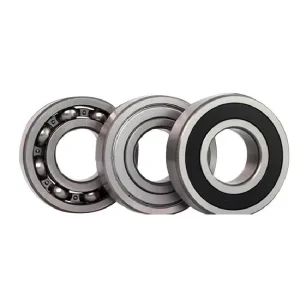
Özet
Bearings are fundamental mechanical components engineered to manage motion between parts, primarily by reducing friction. This analysis explores the principal functions of bearings, which encompass the mitigation of frictional resistance, the support and transmission of loads, and the precise guidance of moving components. An examination of bearing typology reveals a spectrum of designs, each optimized for specific operational demands. Key categories include ball bearings, favored for high-speed applications, and roller bearings, valued for their superior load-carrying capacity. Other significant types such as plain bearings, integrated bearing units, slewing ring bearings, and linear bearings serve specialized roles across various industries. The selection of an appropriate bearing is contingent upon a nuanced understanding of application parameters, including load type (radial, axial, or combined), rotational speed, environmental conditions, and required precision. Proper lubrication, installation, and maintenance are identified as paramount for achieving optimal performance and extending the operational lifespan of these critical machine elements, whose function is integral to the reliability and efficiency of countless mechanical systems.
Önemli Çıkarımlar
- Reduce friction between moving parts to improve efficiency and reduce wear.
- Support and transfer radial and axial loads from one machine component to another.
- Ensure precise alignment and guidance for rotating or sliding shafts.
- Enable high-speed rotation with minimal heat generation and power loss.
- The primary function of a bearing is to facilitate controlled motion while managing forces.
- Select the correct bearing type based on load, speed, and environmental factors.
- Proper lubrication is essential for maximizing the bearing's lifespan and performance.
İçindekiler
- The Unseen Engine: Deconstructing the Core Function of a Bearing
- A Taxonomy of Motion: Exploring Primary Bearing Families
- The Anatomy of a Bearing: A Journey Inside
- Load Dynamics: Understanding Forces Acting on Bearings
- The Language of Selection: How to Choose the Right Bearing
- The Life and Times of a Bearing: Installation, Maintenance, and Failure
- Bearings in Our World: Case Studies Across Industries
- The Future of Bearing Technology: Innovations on the Horizon
- Frequently Asked Questions (FAQ)
- Sonuç
- Referanslar
The Unseen Engine: Deconstructing the Core Function of a Bearing
In the grand theater of mechanical engineering, there are stars that command the stage—the powerful engine, the mighty hydraulic press, the swift robotic arm. Yet, behind the curtain, in nearly every machine where one part moves relative to another, lies an unsung hero: the bearing. To ask "what is the function of a bearing?" is to ask a question as fundamental as asking about the purpose of a wheel. Without it, our modern world of smooth, efficient, and rapid motion would grind to a halt. These components are the quiet enablers, the humble facilitators of rotation and linear movement, operating tirelessly in everything from a simple skateboard to a complex jet engine. Their role is not merely to allow motion, but to perfect it—to make it smooth, controlled, and sustainable. They are the nexus where static structures meet dynamic forces, and their performance dictates the efficiency, longevity, and reliability of the entire system they inhabit. Understanding their function is the first step toward appreciating the silent, constant work they do to keep our world turning.
The Philosophical Heart of Motion: Reducing Friction
At its very essence, the primary function of a bearing is to conquer an elemental force of nature: friction. Imagine trying to slide a heavy stone block across a rough floor. The effort required is immense. The surfaces scrape against each other, generating heat, noise, and wear. This resistance is friction. Now, imagine placing a series of round logs beneath that same stone block. Suddenly, the block glides forward with a fraction of the effort. The logs have replaced sliding friction with rolling friction, a far less formidable opponent.
This simple analogy captures the soul of most bearings. They are a sophisticated, engineered version of those logs. Instead of two flat surfaces grinding against one another, a bearing introduces rolling elements—balls or rollers—between the moving and stationary parts. These elements transform the energy-wasting, high-resistance sliding contact into a much more efficient rolling contact. This reduction in friction is not a minor improvement; it is a revolutionary one. It means less energy is wasted as heat, allowing machines to run faster, cooler, and with significantly less power consumption. It also means less wear and tear on components, dramatically extending the operational life of machinery and reducing the need for constant repair and replacement. Therefore, the most fundamental answer to "what is the function of a bearing?" is that it is a master of managing friction, making motion possible where it would otherwise be impractical.
The Silent Guardian: Supporting and Managing Loads
While reducing friction is a primary purpose, a bearing would be useless if it could not simultaneously withstand the immense forces at play within a machine. This brings us to the second core function: supporting and transferring loads. A bearing acts as a structural interface, carrying the weight and forces from a rotating or moving part (like a shaft) and transferring them to a stationary part (like a housing).
Consider the wheel of a heavy cargo truck. A small set of bearings inside the wheel hub must support a portion of the truck's multi-ton weight while the wheel spins at high speeds. These forces are not always simple downward pressures. They can come from any direction. A Radial Bearing is designed to handle loads that are perpendicular to the shaft's axis—like the weight of the truck pressing down on the axle. An Axial Bearing (or thrust bearing) is designed to handle loads that are parallel to the shaft's axis—like the force pushing on a ship's propeller shaft. In most real-world applications, bearings must handle a combination of both radial and axial loads. The ability to manage these forces without deforming or failing is a testament to their incredible engineering, involving precise geometry and materials with immense compressive strength. A bearing's function, in this sense, is to be a steadfast guardian, ensuring that forces are channeled correctly and that the machine maintains its structural integrity under operational stress.
The Master of Precision: Guiding and Constraining Motion
The third pillar of a bearing's function is to guide and constrain motion with exceptional precision. It is not enough to simply allow a shaft to spin; it must spin in a very specific location and with minimal deviation. A bearing defines the axis of rotation or the path of linear movement. It holds the moving component in its exact intended position relative to the rest of the assembly.
Think of the read/write head in a computer hard drive. It hovers nanometers above a platter spinning at thousands of revolutions per minute. The motor that spins this platter relies on incredibly precise bearings. Any wobble or deviation in the platter's rotation—what engineers call "runout"—would be catastrophic, leading to data corruption or a complete failure of the drive. In this context, the function of the bearing is to provide a near-perfect axis of rotation. This same principle applies to machine tool spindles that must cut metal with micron-level accuracy, to medical imaging equipment where scanners must move smoothly and precisely, and to countless other applications where exact positioning is not just a preference but a necessity. By constraining unwanted movement and permitting only the desired motion, bearings ensure that machines operate with the repeatability and accuracy their designs demand.
A Taxonomy of Motion: Exploring Primary Bearing Families
The world of bearings is not monolithic. Just as a carpenter has different tools for different tasks, engineers have a vast array of bearing types, each designed to excel under specific conditions. Understanding this taxonomy is key to appreciating the nuance in their application. The choice is not arbitrary; it is a calculated decision based on a deep analysis of forces, speeds, and the operational environment. While there are countless variations, most can be grouped into several major families, each with a distinct personality and set of capabilities. Exploring these families helps to provide a more complete answer to what is the function of a bearing, as their function is often defined by their form. Let's examine the most prominent types, including the versatile Bilyalı Rulmanlar that are ubiquitous in modern machinery.
Ball Bearings: The Epitome of Speed and Precision
When most people picture a bearing, they likely imagine a Ball Bearing. These are perhaps the most common type, and for good reason. They use spherical rolling elements (balls) that make a very small, point-like contact with the inner and outer raceways. This minimal contact area is their defining feature, and it brings with it a significant advantage: low rolling friction. This low friction allows Bilyalı Rulmanlar to rotate at very high speeds with minimal heat generation, making them the ideal choice for applications like electric motors, fans, and high-speed spindles.
However, this point contact is also their primary limitation. Because the load is concentrated on such a small area, their ability to carry heavy loads is somewhat restricted compared to other types. They are masters of speed and precision, but not necessarily of brute strength. Within this family, there are further specializations. Deep-groove ball bearings can handle moderate radial and some axial loads, making them incredibly versatile. Angular contact ball bearings are designed to handle significant combined loads in one direction, often used in pairs in applications like wheel hubs and machine tool heads.
Roller Bearings: The Titans of Load Capacity
Where Bilyalı Rulmanlar prioritize speed, Makaralı Rulmanlar are built for strength. Instead of a point-contacting ball, they utilize various forms of cylindrical rollers. This creates a line of contact between the rolling element and the raceways. Think back to our analogy of moving the stone block: if you use a thin pipe (a point contact), it might deform under the weight. If you use a thick log (a line contact), it can support far more weight. This larger contact area allows Makaralı Rulmanlar to distribute the load more effectively, giving them a much higher load-carrying capacity.
This makes them indispensable in heavy-duty applications like construction equipment, gearboxes, and railway axle boxes. The family of Makaralı Rulmanlar is diverse:
- Silindirik Makaralı Rulmanlar excel at carrying very high radial loads.
- Oynak Makaralı Rulmanlar have a barrel-shaped roller that allows them to accommodate misalignment between the shaft and housing, a common issue in large, heavy machinery.
- Konik Makaralı Rulmanlar use conical rollers and raceways. This clever design allows them to handle very large radial and axial loads simultaneously, making them a staple in automotive wheel hubs and industrial gear sets. The trade-off for this strength is typically a lower speed capability compared to ball bearings, as the larger contact area generates more friction.
| Özellik | Bilyalı Rulmanlar | Makaralı Rulmanlar |
|---|---|---|
| Contact Area | Point Contact | Line Contact |
| Primary Strength | High Speed, Low Friction | Yüksek Yük Kapasitesi |
| Load Handling | Good for moderate radial and light axial loads | Excellent for heavy radial and axial loads |
| Speed Capability | Very High | Moderate to High |
| Friction Level | Lower | Higher |
| Typical Use Cases | Electric motors, fans, power tools, hard drives | Gearboxes, construction equipment, railway axles |
| Yanlış Hizalama Toleransı | Generally low (except for self-aligning types) | Higher (especially in spherical roller types) |
Plain Bearings: The Elegance of Simplicity
Not all bearings need to roll. A Kaymalı Yatak, also known as a bushing or a journal bearing, is the simplest type of bearing. It has no moving parts. Instead, it is essentially a sleeve that provides a low-friction surface for a shaft to slide or rotate against. The magic of a Kaymalı Yatak often lies in the material it's made from—such as bronze, graphite-impregnated polymers, or other self-lubricating composites—or in the presence of a lubricant.
In many applications, especially at high speeds, a phenomenon called hydrodynamic lubrication occurs. The rotating shaft pulls a thin film of oil or grease into the gap between the shaft and the bearing. This film becomes a pressurized wedge of fluid that completely separates the two metal surfaces. The shaft is, in effect, floating on a layer of lubricant. In this state, the friction is incredibly low, and there is virtually no wear. Plain Bearings are valued for their low cost, high load capacity (the load is spread over a large surface area), and quiet operation. They are commonly found in engine crankshafts, pivot points in construction equipment, and many other applications where rotational speeds are consistent or motion is oscillatory.
Bearing Units: The Integrated Solution
A Rulman Ünitesi is a clever, pre-assembled solution that combines a bearing (typically a deep-groove ball bearing) with a housing. These units are designed for easy and secure mounting, saving significant time and effort during installation. The housing, often made of cast iron or pressed steel, provides a solid base to bolt the unit onto a machine's frame. Popular housing styles include the "pillow block," which supports a shaft running parallel to the mounting surface, and the "flange" type, for mounting on a surface perpendicular to the shaft.
The key advantage of a Rulman Ünitesi is convenience and reliability. It eliminates the need for the end-user to design and manufacture a separate housing and ensures that the bearing is correctly aligned within its enclosure. Many of these units also feature enhanced sealing solutions to protect the internal bearing from contaminants like dust and moisture, and they often come pre-lubricated for life or with a grease nipple for easy relubrication. This integrated approach simplifies machine design and maintenance, making them extremely popular in agricultural machinery, conveyor systems, and industrial fans.
Specialized Bearings: Pushing the Boundaries of Engineering
Beyond these main families lie a fascinating world of specialized bearings designed for unique and demanding challenges. These are not your everyday components; they are highly engineered solutions for specific problems.
Slewing Ring Bearings: The Giants of Rotation
Imagine the challenge of rotating the massive turret of a construction crane or the enormous blade assembly of a wind turbine. This requires a Slewing Ring Bearing. These are large-diameter bearings, often several meters across, designed to handle immense combined loads, including heavy axial, radial, and tilting moment loads. They are essentially the rotating joint for colossal structures. A Slewing Ring Bearing often incorporates gear teeth on its inner or outer ring, allowing it to be driven directly by a pinion gear. Their function is to provide slow, controlled, and powerful rotation for the world's largest machinery.
Linear Bearings: The Path of Straightness
While most bearings facilitate rotation, a Lineer Rulman is designed to enable smooth, precise motion along a straight path. They are the foundation of automation, robotics, and precision measurement equipment. A common type uses recirculating balls that run along a profiled rail, providing extremely low friction and high rigidity. Think of the movement of a 3D printer's extruder head or the gantry of a CNC router. This precise, repeatable straight-line motion is made possible by Lineer Rulman systems. They ensure that the movement is smooth and free of the stick-slip phenomenon that can plague simple sliding systems, guaranteeing accuracy and high-quality results in manufacturing and measurement processes.
The Anatomy of a Bearing: A Journey Inside
To truly grasp the function of a bearing, one must venture inside its deceptively simple exterior. Like a finely crafted watch, a bearing is a marvel of precision engineering, where each component has a distinct and vital role to play. The synergy between these parts is what allows a bearing to withstand tremendous forces while enabling nearly frictionless motion. Let's disassemble a typical rolling-element bearing in our minds and examine the purpose of each constituent part. This internal exploration reveals how the physical form of the bearing directly serves its core functions of load support, friction reduction, and motion guidance.
The Rolling Elements: Balls vs. Rollers
At the very heart of any rolling bearing are the rolling elements themselves. These are the components that do the "rolling" and are the primary reason these bearings are so efficient. As we've touched upon, they come in two main families: balls and rollers.
-
Balls: These are perfectly spherical elements. The geometry of a sphere means that when it is placed between two surfaces (the raceways), it makes contact at an infinitesimally small point. This point contact is the key to the low-friction, high-speed capabilities of Bilyalı Rulmanlar. The challenge for manufacturers is to create balls that are not only incredibly spherical but also have a superb surface finish and are made from extremely hard, uniform material to withstand the concentrated stress at the point of contact.
-
Rollers: These elements come in various shapes, but all are based on a cylindrical form. This creates a line of contact with the raceways. This line contact drastically increases the surface area over which the load is distributed, which is why Makaralı Rulmanlar have such a high load capacity. The engineering challenge here is to manufacture rollers with perfect geometry (cylindrical, tapered, or spherical) to ensure the load is distributed evenly along the line of contact. Any deviation can create stress concentrations, leading to premature failure.
The choice between balls and rollers is the most fundamental design decision, representing a trade-off between speed (balls) and load capacity (rollers).
The Raceways: The Paths of Motion
The rolling elements need a smooth, hard path to travel on. This path is provided by the raceways. In a standard bearing, there are two rings, each with a precisely ground groove or track on its surface.
- Inner Ring: This ring fits onto the rotating shaft. Its inner diameter is machined to a very tight tolerance to ensure a snug fit. The outer surface of this ring contains one of the raceways.
- Outer Ring: This ring fits into the stationary housing. Its outer diameter is machined to fit snugly within the housing bore. The inner surface of this ring contains the opposing raceway.
The raceways are arguably the most critical surfaces in the bearing. Their geometry, surface finish, and hardness are paramount. The shape of the raceway groove is designed to conform closely to the shape of the rolling element (a curved groove for a ball, a flat or crowned track for a roller). This "osculation" helps to distribute stress and guide the rolling elements. The surfaces are polished to a mirror-like finish to minimize friction and are hardened through heat treatment to withstand the immense and repetitive contact stresses without deforming or wearing out.
The Cage: The Unsung Organizer
If you were to simply place a set of balls or rollers between two rings, they would quickly bunch up, rub against each other, and cause the bearing to fail. To prevent this, a component called the cage (or retainer or separator) is used. The function of the cage is to maintain the proper spacing between the rolling elements, ensuring they are evenly distributed around the raceway. This prevents adjacent elements from colliding, which would create unnecessary friction, wear, and noise.
The cage guides the rolling elements as they travel along the raceways, ensuring smooth and stable operation, especially at high speeds. Cages can be made from various materials, including pressed steel (common and cost-effective), machined brass (strong and good for high speeds), or advanced polymers like polyamide (lightweight, low friction, and flexible). The design of the cage itself is a complex engineering task; it must be strong enough to withstand the forces of acceleration and deceleration but also lightweight and designed to minimize friction and facilitate the flow of lubricant to the rolling elements.
Seals and Shields: The Protectors from Contamination
A bearing is a system of high-precision moving parts. Its greatest enemy is contamination. Even a microscopic particle of dust, dirt, or moisture can disrupt the smooth rolling motion, dent the delicate raceways, and lead to rapid failure. This is where seals and shields come in.
-
Shields (Z, ZZ): A shield is a non-contacting metal disc that is fitted into a groove on the outer ring. It extends inwards, leaving a very small gap between it and the inner ring. Shields provide good protection against larger solid contaminants and are effective at retaining the grease lubricant within the bearing. Because they do not make contact with the inner ring, they generate no additional friction, making them suitable for high-speed applications.
-
Seals (RS, 2RS): A seal is typically made of a synthetic rubber material (like NBR) that is bonded to a metal insert. The seal is fitted to the outer ring, but its flexible "lip" makes light contact with the inner ring. This contact provides a much more effective barrier against both solid and liquid contaminants, such as water or chemical splashes. This makes sealed bearings ideal for dirty or wet environments. The trade-off is that the rubbing contact of the seal lip generates a small amount of friction and heat, which may slightly limit the maximum permissible speed of the bearing.
Understanding this internal anatomy deepens our comprehension of what the function of a bearing is. It's not a single function, but a harmony of functions performed by each part: the rings provide the structure, the rolling elements conquer friction, the cage ensures order, and the seals provide protection.
Load Dynamics: Understanding Forces Acting on Bearings
A machine is a dynamic environment, a place of constant forces and motion. For a bearing to perform its function correctly, it must be chosen and oriented to properly manage these forces, which engineers call "loads." A load is essentially a force that is applied to the bearing. Understanding the different types of loads and how they affect a bearing is absolutely fundamental to machine design and maintenance. It is the language through which we describe the challenges a bearing will face during its operational life. Misunderstanding or miscalculating these loads is one of the most common reasons for premature bearing failure. Let's delve into the primary types of loads and explore their implications for bearing selection and performance.
Radial Loads: The Perpendicular Force
Imagine a simple wheel and axle. The weight of the vehicle pushing down on the axle is a perfect example of a radial load. A radial load is any force that acts perpendicularly to the axis of the shaft (the center line of rotation). It acts outwards from the center, like the spokes on a wheel or the rays of the sun. The vast majority of bearings in common applications, such as those in electric motors, conveyor rollers, and simple gearboxes, are primarily designed to support radial loads.
Deep-groove ball bearings and cylindrical roller bearings are excellent at handling pure radial loads. The force is transmitted from the inner ring, through the rolling elements at the bottom of the bearing, to the outer ring and into the housing. The rolling elements on the top half of the bearing are actually unloaded in this scenario. The bearing's "radial load capacity" is a key specification that tells a designer how much of this perpendicular force it can safely withstand.
Axial (Thrust) Loads: The Parallel Push
Now, picture a different scenario: a boat propeller. As the propeller spins, it pushes water backward, which in turn "thrusts" the boat forward. This forward force pushes the entire propeller shaft along its length. This is an axial load, also known as a thrust load. An axial load is any force that acts parallel to the axis of the shaft. It tries to push or pull the shaft through the bearing.
Handling axial loads requires a different design approach. A simple cylindrical roller bearing, for instance, has no ability to support an axial load; the shaft would simply slide out. Deep-groove ball bearings can handle some axial load because the balls sit in a curved groove, allowing force to be transferred at an angle. However, for significant axial loads, specialized bearings are required. Eksenel Bilyalı Rulmanlar and Konik Makaralı Rulmanlar are specifically designed for this purpose. Their raceways and rolling elements are oriented to directly oppose the force along the shaft's axis. Understanding what the function of a bearing is in this context means recognizing its role in preventing this unwanted axial movement.
| Load Type | Direction of Force | Primary Bearing Solution | Real-World Example |
|---|---|---|---|
| Radial Load | Perpendicular to the shaft axis (like gravity) | Deep Groove Ball Bearing, Cylindrical Roller Bearing | A car's weight on its wheel bearings. |
| Axial (Thrust) Load | Parallel to the shaft axis (pushing or pulling) | Thrust Bearing, Tapered Roller Bearing | The forward push on a ship's propeller shaft. |
| Combined Load | A mix of both Radial and Axial forces | Angular Contact Ball Bearing, Tapered Roller Bearing | A helical gear in a transmission, pushing sideways and along the shaft. |
| Moment Load | A tilting or overturning force | Paired bearings, Slewing Ring Bearings | The force of wind on a large crane boom. |
Combined Loads: The Reality of Complex Machinery
In the real world, pure radial or pure axial loads are rare. Most applications involve a mix of both, known as a combined load. A classic example is a helical gear in an automotive transmission. As the gear transmits torque, it creates both a radial force (pushing the shafts apart) and an axial force (pushing the shafts along their length).
Bearings chosen for these applications must be able to handle both types of forces simultaneously. This is where Eğik Bilyalı Rulmanlar and Konik Makaralı Rulmanlar shine. Their internal geometry—the raceways are angled relative to the shaft axis—is specifically designed to accommodate this combination of forces. A single tapered roller bearing, for example, can support both a heavy radial load and a heavy axial load in one direction. They are often mounted in pairs (in a "face-to-face" or "back-to-back" arrangement) to handle axial loads in both directions. Selecting the correct contact angle is a critical design step to balance the bearing's capacity for radial versus axial loads.
Static vs. Dynamic Loads: At Rest and in Motion
Finally, it's important to differentiate between static and dynamic loads.
-
Static Load: This is the load on a bearing when it is stationary or rotating very slowly. The "static load rating" (C₀) of a bearing represents the maximum load it can endure without suffering permanent damage (brinelling) to the raceways or rolling elements. This is important for applications that experience high shock loads or operate under heavy loads while stationary.
-
Dynamic Load: This is the load on a bearing when it is rotating. The "dynamic load rating" (C) is a more complex value used in calculations to predict the bearing's fatigue life. Bearing life is not infinite; under a dynamic load, the constant rolling contact eventually causes material fatigue, leading to spalling or flaking of the raceway surfaces. The dynamic load rating is the theoretical load at which a group of identical bearings would achieve a life of one million revolutions. This rating is the cornerstone of calculations used to select a bearing that will last for its required design life.
A thorough understanding of these load dynamics is not just academic; it is the practical basis for ensuring machine reliability. It allows an engineer to translate the forces within a machine into a concrete bearing specification, fulfilling the component's ultimate function: to manage forces and enable motion reliably over a long period.
The Language of Selection: How to Choose the Right Bearing
Selecting the right bearing is a conversation between the demands of the application and the capabilities of the component. It is a process of translation, turning requirements like speed, force, and lifespan into a specific part number. This process goes far beyond simply picking a bearing that fits. It involves a holistic analysis of the entire mechanical system. An incorrect choice can lead to suboptimal performance, frequent downtime, and even catastrophic failure. A well-chosen bearing, on the other hand, becomes an invisible partner, quietly performing its function for years or even decades. Let's explore the key factors that guide this critical selection process, a skill that separates novice designers from seasoned engineers. This is where understanding what is the function of a bearing moves from theory to practice.
Deciphering Application Requirements: Speed, Load, and Environment
The selection journey always begins with a thorough interrogation of the application. The three most fundamental questions are:
- What are the loads? As discussed previously, one must identify the magnitude and direction of all forces. Are they radial, axial, or combined? Are they constant, or do they fluctuate? Are there shock loads? The load profile is the primary determinant of whether a ball or roller bearing is needed, and what specific type within that family (e.g., cylindrical vs. tapered roller).
- What are the speeds? How fast will the shaft rotate? Speed is typically measured in revolutions per minute (RPM). High-speed applications generate more heat and centrifugal forces on the rolling elements. This often points towards Bilyalı Rulmanlar due to their lower friction, and may require special cage materials and lubricants. Every bearing has a "limiting speed" which should not be exceeded.
- What is the environment? Where will the bearing operate? Is it a clean room or a dusty quarry? Will it be exposed to extreme temperatures, high humidity, or corrosive chemicals? The environment dictates the requirements for sealing (shields vs. seals), material (standard steel vs. stainless steel or ceramics), and lubricant type.
Beyond these, other factors like required lifespan, acceptable noise levels, and the potential for shaft misalignment must also be considered. The SKF bearing selection process provides a structured approach to evaluating these operating conditions (SKF, n.d.-b).
Material Science: The Substance Behind the Strength
The material a bearing is made from is the foundation of its performance. The vast majority of rolling bearings are made from a special type of high-purity, high-carbon chromium alloy steel, often referred to as bearing steel (like AISI 52100). This material is chosen for its extraordinary properties after undergoing a precise heat treatment process. It achieves an exceptional hardness to resist deformation under load, high fatigue strength to endure billions of stress cycles, and dimensional stability to maintain its precise shape over time.
However, standard steel is not always the answer.
- Stainless Steel Bearings: For applications in the food and beverage industry or medical fields, or where exposure to moisture or corrosive agents is unavoidable, stainless steel bearings are used. They offer excellent corrosion resistance, though typically with slightly lower load capacities than standard bearing steel.
- Ceramic Hybrid Bearings: These bearings use steel rings with ceramic (typically silicon nitride) rolling elements. Ceramic balls are lighter, harder, and smoother than steel balls. This results in bearings that can run faster, generate less heat, have higher stiffness, and offer superior electrical insulation. They are often found in high-performance machine tool spindles and electric motors.
- Polymer Bearings: In some light-load or highly corrosive environments, bearings made entirely of advanced plastics can be an option. They are lightweight, corrosion-proof, and can often run without any external lubrication, but their load and speed capabilities are limited.
The Role of Lubrication: The Lifeblood of a Bearing
A bearing cannot perform its function without proper lubrication. Lubrication is not an accessory; it is an integral part of the bearing system. Its primary purposes are:
- To form a thin film separating the rolling elements from the raceways, preventing metal-to-metal contact and minimizing wear.
- To reduce friction and the heat it generates.
- To protect the bearing surfaces from corrosion.
- To help flush away contaminants from the rolling contact areas.
There are two main types of lubrication:
- Grease: Grease is a mix of a base oil, a thickener (like a metallic soap), and additives. The thickener acts like a sponge, holding the oil in place and releasing it as needed. Grease is used in the vast majority of bearing applications because it is simple to apply, stays in place, and helps to seal the bearing. Many bearings, like those in a Rulman Ünitesi, come "greased for life."
- Oil: Oil lubrication is generally used for higher-speed or higher-temperature applications where the lubricant needs to do more than just lubricate—it also needs to carry away heat. Oil can be applied via a simple oil bath, a circulating system with filters and coolers, or even a fine oil-air mist.
The choice of lubricant and its viscosity is just as important as the choice of the bearing itself. A detailed guide on lubrication principles, such as the one from Schaeffler, is an invaluable resource for engineers (Schaeffler Technologies AG & Co. KG, 2013).
Precision and Tolerance: The ISO and ABEC Standards
Not all bearings are created equal. For applications requiring high accuracy, such as in scientific instruments or precision machine tools, the manufacturing tolerances of the bearing are paramount. These tolerances define the permissible variations in the bearing's dimensions (like bore and outer diameter) and its running accuracy (runout).
Two main standards are used to classify bearing precision:
- ISO 492: An international standard that defines tolerance classes. The normal class is P0, with precision increasing through P6, P5, P4, and P2.
- ABEC Scale: Primarily used in North America, this scale from the Annular Bearing Engineers' Committee grades precision with odd numbers: ABEC 1 (standard), ABEC 3, ABEC 5, ABEC 7, and ABEC 9.
A higher precision class (e.g., P4 or ABEC 7) means the bearing's dimensions are more tightly controlled and it will rotate with less wobble or error. This precision comes at a higher cost. Selecting the appropriate precision class involves balancing the application's need for accuracy with the budget. For most general industrial applications, a standard P0 or ABEC 1 bearing is more than sufficient.
The Life and Times of a Bearing: Installation, Maintenance, and Failure
A bearing's journey does not end once it is selected and purchased. In fact, its operational life is profoundly influenced by what happens next. The most perfectly specified, highest-quality bearing can fail in a fraction of its expected lifespan if it is installed incorrectly, lubricated improperly, or neglected. Understanding the lifecycle of a bearing—from its careful installation to its eventual retirement—is crucial for any maintenance professional or engineer aiming for maximum reliability and minimum downtime. This practical knowledge transforms the abstract concept of "what is the function of a bearing" into a tangible, long-term reality. A bearing's function is only fulfilled if it can be sustained over its intended service life.
The First Step: Proper Mounting and Installation Techniques
The first few moments of a bearing's installed life are among its most perilous. Incorrect mounting procedures are a leading cause of premature bearing failure. The goal is to mount the bearing onto its shaft and into its housing without damaging the delicate raceways or rolling elements.
-
Applying Force Correctly: A cardinal rule of bearing installation is to never apply the mounting force through the rolling elements. If you are pressing a bearing onto a shaft, the force must be applied evenly and squarely to the face of the inner ring only. If you are pressing it into a housing, the force must be applied to the outer ring. Using a hammer and a punch is a recipe for disaster, as it creates concentrated impact loads that can easily dent the raceways (a defect called brinelling). Proper tools include hydraulic presses or specialized bearing fitting tool kits with impact sleeves that ensure force is applied to the correct ring.
-
Managing Interference Fits: Bearings are typically installed with a "press fit" or "interference fit," meaning the shaft is slightly larger than the bearing's bore, or the housing bore is slightly smaller than the bearing's outer diameter. This ensures the rings do not spin on the shaft or in the housing. For smaller bearings, this can be overcome with mechanical force. For larger bearings, trying to press them on cold would require enormous force and risk damage. Instead, heat is used. A bearing induction heater is the preferred method. It safely and evenly heats the bearing, causing it to expand just enough to slide easily onto the shaft. As it cools, it shrinks to create a powerful interference fit.
A Regimen of Care: Lubrication Schedules and Monitoring
Once installed, a bearing's long-term health depends on a consistent regimen of care, centered around lubrication and monitoring.
-
Relubrication: While many smaller bearings are sealed and "lubricated for life," larger or more critical bearings require periodic relubrication. But how much grease, and how often? Both over-lubrication and under-lubrication can be destructive. Over-greasing can cause the bearing to overheat due to churning losses, while under-lubrication leads to metal-to-metal contact and rapid wear. Manufacturers provide formulas to calculate the correct relubrication interval and grease quantity based on bearing size, speed, and operating temperature. Following these guidelines is not just recommended; it is essential.
-
Condition Monitoring: You don't have to wait for a bearing to fail to know something is wrong. Condition monitoring techniques allow maintenance teams to "listen" to the health of a bearing. The most common method is vibration analysis. A healthy bearing produces a smooth, consistent vibration signature. As defects like microscopic cracks or spalls develop on the raceways, they create tiny impacts each time a rolling element passes over them. These impacts show up as distinct frequencies in the vibration spectrum, providing an early warning of impending failure weeks or even months in advance. Other techniques include acoustic analysis, temperature monitoring, and oil analysis.
Reading the Signs: Common Modes of Bearing Failure
When a bearing does fail, it often leaves behind a story written on its surfaces. Examining a failed bearing is a crucial forensic exercise that can reveal the root cause of the failure, allowing for corrective actions to prevent a recurrence. Some common failure modes include:
- Fatigue (Spalling): This is the "natural" end of a bearing's life. After billions of stress cycles, the material eventually fatigues, and small pieces of the raceway surface flake off or spall. If a bearing reaches its calculated fatigue life, it is a success. If it happens prematurely, it often points to overloading.
- Contamination: Hard particles entering the bearing leave dents (indentations) in the raceways. As rolling elements pass over these dents, it raises stress and can lead to premature fatigue. Moisture contamination leads to corrosion and rust, which destroys the smooth surfaces.
- Lubrication Failure: Inadequate lubrication leads to a discolored, blue/black appearance from overheating and adhesive wear, where microscopic points on the surfaces weld together and are torn apart.
- Misalignment: If a shaft is not perfectly aligned with the housing, the load will be unevenly distributed across the raceway, creating a distinctive wear path off to one side. This is a common issue that can be solved by using self-aligning bearings or by correcting the machine's alignment.
Comprehensive handbooks on bearing maintenance provide detailed visual guides to help identify these failure modes (SKF, 2022).
Extending Lifespan: Proactive Maintenance Strategies
The modern approach to maintenance is not reactive (fixing things when they break) but proactive. By combining proper installation, scheduled lubrication, and condition monitoring, the life of a bearing can be maximized. This strategy, often called predictive maintenance, allows for failures to be anticipated. Instead of a sudden, unplanned shutdown of a critical production line, a failing bearing can be identified and scheduled for replacement during a planned maintenance window. This approach dramatically increases machine reliability, reduces maintenance costs, and improves overall plant safety and productivity. It ensures the bearing can continue to perform its vital function for as long as possible. Many durable Makaralı Rulmanlar are designed with these proactive strategies in mind, offering long service intervals when properly maintained.
Bearings in Our World: Case Studies Across Industries
The theoretical discussion of loads, speeds, and materials comes to life when we see how bearings perform in the real world. They are not just abstract mechanical concepts; they are the linchpins of technologies that define our daily lives and drive our global economy. From the car that takes us to work to the power plant that lights our homes, bearings are performing their critical functions silently and efficiently. Examining these applications provides a tangible and compelling answer to the question, "what is the function of a bearing?" It shows us that their function is to enable the very motion that underpins modern civilization.
Automotive: From Wheel Hubs to Transmissions
The modern automobile is a symphony of rotating parts, and nearly every one of them depends on bearings.
- Wheel Hubs: The bearings in a car's wheel hub are a marvel of engineering. They must support the vehicle's weight (a heavy radial load) while also withstanding the immense side forces during cornering (an axial load). This is a classic combined load application. Modern cars use sophisticated, pre-assembled Rulman Ünitesi assemblies, often containing double-row angular contact ball bearings or tapered roller bearings. These units are sealed for life and designed for extreme reliability, as a failure here would be catastrophic.
- Transmissions and Gearboxes: Inside a manual or automatic transmission, shafts carrying various gears spin at thousands of RPM. These shafts are supported by a combination of ball bearings, cylindrical roller bearings, and tapered roller bearings. Each bearing is carefully selected to handle the specific radial and axial loads generated by the meshing gears. The function of these bearings is to ensure the shafts are held in precise alignment, allowing for smooth and quiet gear shifts and efficient power transmission from the engine to the wheels.
Aerospace: Precision and Reliability at 30,000 Feet
Nowhere is reliability more paramount than in the aerospace industry. Bearings in jet engines, flight control systems, and landing gear operate under the most extreme conditions imaginable.
- Jet Engine Main Shaft: The main shaft of a commercial jet engine, which connects the turbine to the compressor, can spin at over 10,000 RPM at temperatures exceeding hundreds of degrees Celsius. The bearings supporting this shaft are among the most technologically advanced in the world. They are typically angular contact ball bearings or cylindrical roller bearings made from exotic, high-temperature steel alloys or even ceramics. Their function is not just to support loads and allow rotation, but to do so with unparalleled reliability for thousands of flight hours.
- Flight Control Actuators: The ailerons, elevators, and rudder that steer an aircraft are moved by hydraulic or electric actuators. The pivot points in these systems use specialized Kaymalı Yatak types or spherical roller bearings that must provide smooth, backlash-free motion to ensure the pilot has precise control of the aircraft.
Industrial Machinery: The Backbone of Manufacturing
The factories that produce nearly every product we use are filled with machinery that relies on bearings.
- Conveyor Systems: In logistics centers and manufacturing plants, miles of conveyors move goods 24/7. Each roller in these systems rotates on a simple deep-groove ball bearing. While the load on any single bearing is small, their sheer number is immense. Here, the function of the bearing is to provide low-friction, reliable motion at a low cost. Often, sealed-for-life Rulman Ünitesi pillow blocks are used for their ease of installation and maintenance-free operation.
- Machine Tool Spindles: The spindle of a CNC milling machine or lathe is the heart of the machine. It holds the cutting tool and must rotate with extreme precision and stiffness to produce accurate parts. These spindles use matched sets of high-precision angular contact ball bearings, often with ceramic balls. The bearings are preloaded against each other to eliminate any radial or axial play. Here, the function of the bearing is to provide a rotation axis that is as close to perfect as possible.
Renewable Energy: Harnessing Wind with Slewing Ring Bearings
The shift towards renewable energy has created new and demanding applications for bearings. A modern wind turbine is a prime example.
- Main Rotor Shaft: The massive three-bladed rotor of a wind turbine can weigh many tons. This enormous weight is supported by a very large main shaft bearing, typically a double-row spherical roller bearing or a pair of tapered roller bearings. This bearing must handle the immense, fluctuating radial load from the rotor's weight and the wind.
- Yaw and Pitch Systems: To maximize energy capture, a wind turbine must be able to turn its main housing (the nacelle) to face the wind. This rotation is accomplished by a large-diameter Slewing Ring Bearing, known as the yaw bearing. Additionally, each blade can rotate along its own axis to adjust its pitch. This movement is controlled by three more Döner Halka Rulmanlar, known as pitch bearings. The function of these bearings is to enable the slow but powerful adjustments that keep the turbine optimized for the current wind conditions, handling enormous bending moments and operational loads.
These case studies illustrate that the function of a bearing is context-dependent, tailored to the unique challenges of each industry and application, yet universally centered on the core principles of managing friction, supporting loads, and guiding motion.
The Future of Bearing Technology: Innovations on the Horizon
The humble bearing, a technology that has existed in some form for centuries, is far from static. As machinery becomes smarter, faster, and more efficient, bearings are evolving in lockstep. The future of bearing technology is not just about making them stronger or longer-lasting; it's about making them more intelligent, sustainable, and integrated into the digital ecosystems of modern industry. Looking ahead to 2025 and beyond, several key trends are shaping the next generation of these essential components, promising to redefine our understanding of what the function of a bearing can be.
Smart Bearings: The Rise of Integrated Sensors
For decades, monitoring a bearing's health required external sensors and complex analysis. The future lies in making the bearing itself a source of data. "Smart bearings" are emerging with sensors integrated directly into their structure. These sensors can monitor a range of critical parameters in real-time:
- Vibration: An internal accelerometer can detect the earliest signs of fatigue damage far more clearly than an external sensor.
- Temperature: Monitoring the bearing's internal temperature provides a direct indication of lubrication issues or excessive loading.
- Load: Miniature load sensors can measure the actual radial and axial loads the bearing is experiencing, allowing for a comparison between real-world conditions and the original design specifications.
- Rotational Speed: An integrated speed sensor can precisely track the shaft's RPM.
This data can be transmitted wirelessly to a central control system or a cloud platform. The function of a smart bearing, therefore, expands beyond motion and load support. It becomes a self-diagnosing data node, a critical component of the Industrial Internet of Things (IIoT). This enables true predictive maintenance, optimizes machine performance by providing real-world load data, and can even calculate the bearing's remaining useful life with high accuracy.
Advanced Materials: Pushing Performance Limits
The quest for materials that can withstand more extreme conditions is perpetual. While bearing steel remains the workhorse, research and development are unlocking new possibilities.
- Advanced Ceramics: Beyond the silicon nitride used in hybrid bearings, researchers are exploring other ceramic formulations that offer even higher temperature resistance and hardness. Fully ceramic bearings are already used in highly corrosive or non-magnetic applications.
- High-Performance Polymers: New polymer composites with reinforcing fibers and solid lubricants are enabling Kaymalı Yatak solutions to handle higher loads and speeds than ever before. These materials are self-lubricating, lightweight, and completely corrosion-proof, opening up new application areas.
- Specialized Coatings: The surface of a bearing is where the action happens. Advanced coatings, such as Diamond-Like Carbon (DLC), can be applied to raceways and rolling elements. These ultra-hard, low-friction coatings can dramatically increase a bearing's resistance to wear and seizure, especially in poor lubrication conditions. A bearing with a NoWear coating, for instance, can survive far longer in contaminated environments.
Sustainable Solutions: Eco-Friendly Lubricants and Remanufacturing
As global industries face increasing pressure to reduce their environmental impact, bearing technology is adapting.
- Biodegradable Lubricants: Traditional mineral oil-based greases and oils can be harmful to the environment if they leak. There is a growing demand for high-performance, biodegradable lubricants made from renewable resources like vegetable oils. Developing these eco-friendly lubricants without compromising performance is a major area of innovation.
- Remanufacturing: A large, expensive industrial bearing, such as a Slewing Ring Bearing from a wind turbine or a spherical roller bearing from a steel mill, does not necessarily need to be scrapped when it reaches the end of its service life. Bearing remanufacturing is a sophisticated process where a used bearing is disassembled, cleaned, inspected, and re-machined. Raceways are re-ground, new rolling elements are fitted, and the bearing is reassembled to meet the original specifications, often at a significant cost and carbon footprint saving compared to a new one. This circular economy approach extends the life of valuable resources and reduces industrial waste.
The future function of a bearing is not just mechanical; it is digital and environmental. These components are evolving from passive mechanical parts into active, data-rich participants in their own maintenance, built from materials that push the boundaries of physics and designed with their entire lifecycle, from production to recycling, in mind.
Frequently Asked Questions (FAQ)
What is the most fundamental function of a bearing? The most fundamental function of a bearing is to reduce friction between moving parts. By substituting sliding friction with much lower rolling friction (in ball and roller bearings) or a fluid film (in plain bearings), they enable smooth, efficient motion, which in turn reduces energy consumption and mechanical wear.
What is the difference between a radial load and an axial load? A radial load is a force that acts perpendicular to the shaft's centerline, like the weight of a vehicle pressing down on its axle. An axial load (or thrust load) is a force that acts parallel to the shaft's centerline, like the force pushing a propeller forward. Bearings are specifically designed to handle one or both of these load types.
Why would I choose a Roller Bearing over a Ball Bearing? You would choose a Roller Bearing primarily for its higher load-carrying capacity. The line contact of a roller can support much heavier loads than the point contact of a ball. This makes roller bearings ideal for heavy-duty applications like gearboxes, construction equipment, and railway systems, whereas ball bearings are better suited for high-speed, lower-load applications.
How do I know if a bearing is starting to fail? Common signs of a failing bearing include an increase in noise (grinding, squealing), a noticeable rise in operating temperature, and an increase in vibration. In industrial settings, specialized equipment for vibration analysis can detect the unique frequencies of a developing bearing fault long before it becomes audible, allowing for planned replacement.
What is the purpose of a Bearing Unit? The purpose of a Rulman Ünitesi is to simplify installation and improve reliability. It is a pre-assembled product that combines a bearing (usually a deep-groove ball bearing) with a housing (like a pillow block or flange). This eliminates the need to machine a separate housing and ensures the bearing is properly aligned and sealed, making it a convenient solution for applications like conveyor systems and agricultural machinery.
Are Plain Bearings obsolete compared to rolling bearings? Not at all. A Kaymalı Yatak (or bushing) is an excellent solution for many applications. They can handle very high loads, are tolerant of shock and contamination, operate very quietly, and are often more compact and less expensive than rolling bearings. In applications with high-speed rotation where a hydrodynamic film can form, they can have an almost infinite life with virtually zero wear.
Why are some bearings, like Slewing Ring Bearings, so large?Döner Halka Rulmanlar are large because they are designed to handle immense loads for very large rotating equipment. They function as the rotating connection for things like crane turrets, excavators, and wind turbines. Their large diameter allows them to support massive axial loads (weight), radial loads (side forces), and powerful tilting moment loads simultaneously.
Does a Linear Bearing work the same way as a rotating bearing? A Lineer Rulman shares the same core principle of reducing friction but applies it to straight-line motion instead of rotation. Many use recirculating balls that run in tracks between a moving carriage and a stationary rail. This allows for extremely smooth, precise, and low-friction linear movement, which is essential for equipment like 3D printers, CNC machines, and automated assembly lines.
Sonuç
The role of the bearing in the mechanical world is both profound and pervasive. It is an exercise in elegance, a solution that addresses the fundamental challenges of friction, force, and precision. We have journeyed from the core principles—understanding that the function of a bearing is to mediate movement—to the diverse forms these components take, from the speed-oriented Bilyalı Rulmanlar to the powerful Makaralı Rulmanlar and the elegantly simple Kaymalı Yatak. We have seen how their internal anatomy, a harmony of rings, rolling elements, and cages, is purpose-built to perform.
The selection of a bearing is a dialogue with the laws of physics, a careful consideration of loads, speeds, and the operational environment. Its life and longevity are not predetermined but are a direct result of human care in installation, lubrication, and monitoring. From the wheels of a car to the heart of a jet engine and the colossal structures of a wind turbine, bearings are the silent, indispensable facilitators of motion. As technology advances, these components are becoming smarter and more sustainable, evolving from passive parts into active, data-driven elements of a connected industrial world. Ultimately, to appreciate the function of a bearing is to recognize a cornerstone of engineering, a component whose flawless performance is so reliable that it allows us to forget it is even there, working tirelessly to keep our world in motion.
Referanslar
Schaeffler Technologies AG & Co. KG. (2013). Lubrication of rolling bearings (TPI 176). https://www.schaeffler.com/remotemedien/media/_shared_media/08_media_library/01_publications/schaeffler_2/tpi/downloads_8/tpi_176_de_en.pdf
SKF. (n.d.-a). Bearing basics. SKF Group. Retrieved February 28, 2024, from
SKF. (n.d.-b). Principles of rolling bearing selection. SKF Group. Retrieved February 28, 2024, from
SKF. (n.d.-c). Selection criteria. SKF Group. Retrieved February 28, 2024, from
SKF. (2022). SKF bearing maintenance handbook. https://cdn.skfmediahub.skf.com/api/public/0901d1968013be94/pdf_preview_medium/0901d1968013be94_pdf_preview_medium.pdf