

 DE
DE  EN
EN  ES
ES  PT
PT  VI
VI  FR
FR  IT
IT  JA
JA  KO
KO  AR
AR  PL
PL  TR
TR  BG
BG  MS
MS  RU
RU 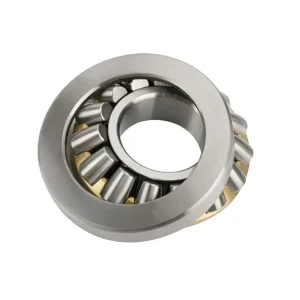
Abstrakt
A roller bearing is a mechanical component designed to reduce rotational friction and support loads by using cylindrical or other non-spherical rolling elements. These elements are situated between two rings, or raceways, to facilitate the movement of machine parts. Unlike ball bearings, which use point contact, roller bearings utilize line contact, enabling them to support significantly higher radial loads, making them indispensable in heavy-duty machinery and industrial applications. This increased load capacity, however, often comes at the cost of lower speed capabilities. Different designs, such as cylindrical, spherical, tapered, and needle roller bearings, are engineered to accommodate specific load types, including radial, axial (thrust), or a combination of both, as well as to tolerate shaft misalignment. The proper selection of a roller bearing is a complex process, contingent on a rigorous analysis of load, speed, environmental conditions, and maintenance requirements to ensure optimal performance and operational longevity in demanding settings.
Wichtigste Erkenntnisse
- Roller bearings use line contact to support much heavier loads than ball bearings.
- Selection depends on load type: radial, axial, or combined forces.
- Different types (cylindrical, spherical, tapered) solve specific engineering challenges.
- Proper lubrication is paramount for bearing life and managing operational speed.
- Environmental factors like temperature and contamination heavily influence roller bearing choice.
- Misalignment tolerance varies greatly between different bearing designs.
- A systematic evaluation ensures the longevity of your heavy-duty machinery.
Inhaltsübersicht
- The Foundational Mechanics of a Roller Bearing
- A Taxonomy of Roller Bearing Designs
- Criterion 1: Analyzing Load Characteristics and Capacity
- Criterion 2: Evaluating Speed and Rotational Demands
- Criterion 3: Assessing Misalignment and Shaft Deflection
- Criterion 4: Considering Environmental and Operating Conditions
- Criterion 5: Lubrication, Mounting, and Maintenance Strategies
- Frequently Asked Questions (FAQ)
- Schlussfolgerung
- Referenzen
The Foundational Mechanics of a Roller Bearing
To truly grasp the significance of the roller bearing in modern engineering, we must first descend into its fundamental principles. It is not merely a component; it is an elegant solution to one of physics' most persistent challenges: friction. Think of the effort required to slide a heavy box across a floor. Now, imagine placing that same box on a cart with wheels. The effort diminishes dramatically. This is the world a roller bearing creates within a machine. It replaces the high-resistance sliding motion with a far more efficient rolling motion.
Deconstructing the Roller Bearing: Core Components
At its heart, a typical roller bearing has a beautifully simple structure, yet each part plays a profound role. It is a system of interacting components working in harmony.
- Inner and Outer Rings: These are the hardened steel rings that provide the raceways, or tracks, for the rolling elements. One ring is typically stationary while the other rotates with the assembly (e.g., the inner ring rotates with a shaft, and the outer ring is fixed in a housing). The precision of these raceways is a direct determinant of the bearing's accuracy.
- Rolling Elements: This is the defining feature. Instead of spheres, these are rollers. Their shape dictates the bearing's primary function. They can be cylindrical, spherical (barrel-shaped), tapered (conical), or long and thin like needles. These elements are what carry the load between the inner and outer rings.
- Cage (or Retainer): The cage is the unsung hero. It maintains the proper spacing between the rolling elements, preventing them from rubbing against each other, which would generate excessive friction and heat. It also helps guide the rollers and evenly distribute the load across the bearing. Cages can be made from stamped steel, machined brass, or advanced polymers.
The Principle of Rolling Friction: A Comparative Perspective
The core advantage of any rolling-element bearing over a plain bearing lies in the type of friction it generates. A plain bearing, which is essentially a sleeve around a shaft, operates on the principle of sliding friction, where two surfaces slide past one another, often separated by a film of lubricant. While effective, this creates substantial resistance, especially at start-up.
A roller bearing, by contrast, operates on rolling friction. The rollers turn between the raceways, and the resistance to this motion is significantly lower than sliding friction. This efficiency translates directly into less energy loss, reduced heat generation, and a longer operational life for the machine.
Differentiating Roller Bearings from Ball Bearings
For many, the terms "ball bearing" and "roller bearing" are used interchangeably. This is a critical misunderstanding. While they serve the same overarching purpose, their internal geometry creates vastly different performance characteristics. The choice between them is one of the first and most consequential decisions in machine design.
Imagine the contact a bicycle tire makes with the road—a tiny point. Now, picture the contact patch of a large truck tire—a wide rectangle. This is the essential difference. A ball makes a point of contact with the raceway, while a roller makes a line of contact. This seemingly small geometric distinction has massive implications.
| Merkmal | Roller Bearing | Ball Bearing |
|---|---|---|
| Contact Area | Line Contact | Point Contact |
| Radial Load Capacity | Very High | Moderate to High |
| Axiale Belastbarkeit | Varies (Low to Very High) | Varies (Low to Moderate) |
| Speed Capability | Moderate to Low | Very High to Moderate |
| Rigidity | High | Moderate |
| Friction | Slightly Higher | Lower |
| Misalignment Tolerance | Generally Low (except Spherical) | Moderate (especially Self-Aligning) |
This difference in contact area is why a roller bearing can support much heavier loads. The force is distributed over a larger area, reducing stress on the material. However, this larger contact area also generates slightly more friction and heat, which is why ball bearings typically excel in high-speed, lower-load applications like small electric motors or computer fans. A roller bearing is the workhorse, built for strength and endurance in applications like industrial gearboxes, construction equipment, and railway axle boxes.
A Taxonomy of Roller Bearing Designs
The term "roller bearing" is not a monolith. It is a family of specialized designs, each bred for a particular purpose. Understanding this taxonomy is akin to a biologist classifying species; each has a unique adaptation for its environment. Selecting the correct type is foundational to a successful mechanical design.
Cylindrical Roller Bearings: For High Radial Loads
These are perhaps the most straightforward of the roller bearing family. As the name implies, the rolling elements are simple cylinders. This geometry gives them an exceptional capacity for carrying loads that are purely radial—that is, perpendicular to the axis of rotation. Think of the force on the axle of a heavy conveyor belt.
Their design also allows for some axial displacement (movement along the shaft), which can be useful for accommodating thermal expansion of the shaft. However, a standard cylindrical roller bearing cannot handle significant axial (thrust) loads. They are specialists, prized for their rigidity and high radial load rating in applications such as large electric motors and industrial transmission systems.
Spherical Roller Bearings: Accommodating Misalignment
Now, let us consider a more complex and forgiving design. The spherical roller bearing is a mechanical marvel. Its rollers are shaped like barrels, not perfect cylinders, and they run on a spherically shaped outer raceway.
What does this achieve? It makes the bearing self-aligning. Imagine a long shaft in a paper mill or a mining conveyor. Due to heavy loads or manufacturing imperfections, that shaft might flex or bend slightly. A rigid bearing like a cylindrical type would be quickly destroyed by this misalignment. The spherical roller bearing, however, can internally pivot, accommodating several degrees of misalignment without sustaining damage. This makes them the premier choice for harsh, unpredictable environments where perfect alignment is a luxury, such as in vibratory screens, rolling mills, and large gearboxes. For a comprehensive look at available designs, exploring a catalog of high-capacity roller bearings can provide specific dimensional and performance data.
Tapered Roller Bearings: Mastering Combined Loads
Many applications do not present neat, purely radial or purely axial loads. Instead, they involve a combination of both. Consider the wheel of a car as it corners. There is the radial load from the vehicle's weight and a powerful axial (thrust) load from the cornering force. This is the domain of the tapered roller bearing.
Its rollers are shaped like truncated cones, and the raceways are angled to match. This clever geometry resolves both radial and axial force vectors simultaneously. Tapered roller bearings are almost always mounted in pairs, facing opposite directions, to handle thrust loads from either direction. Their high load capacity and ability to manage combined loads make them ubiquitous in automotive wheel hubs, gearbox output shafts, and machine tool spindles.
Needle Roller Bearings: The Compact Powerhouses
What if you need a very high load capacity but have extremely limited radial space? This is a common challenge in applications like automotive transmissions, universal joints, and two-stroke engines. The solution is the needle roller bearing.
These bearings use rollers that are very long and thin, like needles (their length is typically more than four times their diameter). This design maximizes the number of contact lines within a given bearing diameter, resulting in a remarkably high radial load capacity for its small cross-section. They are the epitome of compact, high-strength design, but they are sensitive to misalignment and are generally not suited for high speeds.
Thrust Roller Bearings: The Axial Load Specialists
Finally, some applications involve almost exclusively axial, or thrust, loads. Think of the rotating base of a large crane (a slewing ring application) or the support for a vertically oriented shaft in a deep-well pump. For these scenarios, a thrust roller bearing is employed.
In these bearings, the rollers (which can be cylindrical, spherical, or tapered) are arranged in a ring, and they handle loads that are parallel to the axis of rotation. They have an immense axial load capacity but typically cannot accommodate any radial load. Spherical roller thrust bearings are a notable exception, as they can handle both heavy axial loads and some radial load, in addition to tolerating misalignment.
| Bearing Type | Primary Load Direction | Speed Capability | Misalignment Tolerance | Common Applications |
|---|---|---|---|---|
| Cylindrical | Radial | High | Low | Industrial Gearboxes, Electric Motors |
| Spherical | Radial & Moderate Axial | Moderate | Very High | Mining Equipment, Paper Mills |
| Tapered | Combined Radial & Axial | Moderate | Low | Automotive Wheels, Differentials |
| Needle | Radial | Moderate | Low | Transmissions, U-Joints |
| Schubkraft | Axial | Low to Moderate | Varies (Low to High) | Crane Hooks, Vertical Shafts |
Criterion 1: Analyzing Load Characteristics and Capacity
The first and most fundamental step in selecting a roller bearing is to develop a profound understanding of the forces it will be asked to bear. A miscalculation here is not a minor error; it is the blueprint for premature failure. The loads acting upon a bearing are its life's work, and we must characterize them with precision.
Understanding Radial, Axial, and Combined Loads
Forces in a mechanical system are rarely simple. They have magnitude and direction, and for a bearing, this direction is paramount.
- Radial Load: This is a force that acts perpendicularly to the shaft's centerline. Imagine the weight of a heavy pulley pulling down on a shaft. This is a pure radial load. Cylindrical and needle roller bearings are masters of this domain.
- Axial Load (or Thrust Load): This force acts parallel to the shaft's centerline. Picture the force exerted by a drill bit as it pushes into a workpiece. This is a pure axial load. Thrust bearings are designed specifically for this.
- Combined Load: This is the most common scenario in real-world machinery, where both radial and axial forces are present simultaneously. The wheel of a farming tractor turning in a field experiences the radial load of the tractor's weight and the axial load from steering. Tapered roller bearings and spherical roller bearings are the primary solutions for these complex force environments.
Calculating Dynamic and Static Load Ratings
Every bearing catalog lists two critical values: the basic dynamic load rating (C) and the basic static load rating (C₀). These are not arbitrary numbers; they are the standardized measures of a bearing's strength.
- Statische Tragzahl (C₀): This represents the maximum load a non-rotating bearing can endure without suffering permanent deformation of the rollers or raceways. This is a safety concern. Think of a crane that is holding a heavy load stationary. The bearing in the hook sheave must have a static load rating sufficient to prevent damage. It is a measure of brute strength.
- Dynamische Tragzahl (C): This is a more complex concept related to the bearing's fatigue life under rotation. It is the theoretical load at which a bearing will achieve a basic rating life of one million revolutions. This value is used in life calculation formulas to predict how long a bearing will last under a given set of operating loads and speeds. Selecting the right component often involves consulting detailed specifications, such as those found for various industrial roller bearing types.
The Impact of Shock Loads and Vibrations
The calculations for C and C₀ assume smooth, steady loads. Many applications, from rock crushers in South Africa to oil rigs in the Middle East, are anything but smooth. They involve heavy shock loads and constant vibration. These dynamic effects can impose momentary forces on a bearing that are many times greater than the average calculated load.
When selecting a bearing for such an environment, a service factor or application factor must be applied. This is a safety multiplier that effectively de-rates the bearing's capacity to account for the severity of the operating conditions. For example, an application with light shock might use a factor of 1.5, meaning a bearing with 50% more capacity than the calculated load is chosen. For heavy shock loads, this factor could be 3.0 or higher. Ignoring these dynamic effects is a common and costly mistake.
Criterion 2: Evaluating Speed and Rotational Demands
After load, speed is the next great arbiter of bearing selection. The relationship between load, speed, and bearing life is an intricate dance. Pushing a bearing beyond its speed limits is like running a marathon at a sprint pace; exhaustion and failure are inevitable. The primary enemy of speed is heat, which is generated by the friction inherent in the bearing.
Limiting Speeds: The Thermal Barrier
Bearing catalogs list two speed ratings:
- Reference Speed: This is a thermal speed rating based on a standardized set of operating conditions. It provides a useful benchmark for comparing the speed capabilities of different bearings under a common framework.
- Limiting Speed: This is the more practical value. It represents the maximum speed at which a bearing can continuously operate without generating a damaging amount of heat. This speed is influenced by many factors, including the actual load on the bearing, the type and viscosity of the lubricant, the method of lubrication, and the ability of the surrounding assembly to dissipate heat. For roller bearings, due to their line contact and higher friction, this limiting speed is generally lower than for a comparably sized ball bearing.
The Role of Lubrication in Speed Management
Lubrication is not just about reducing friction; it is also the primary mechanism for removing heat from a bearing. The choice of lubricant and its delivery method has a profound impact on a bearing's speed capability.
- Grease Lubrication: This is the most common method. It is simple, low-cost, and provides good protection against contamination. However, grease is not as effective at dissipating heat as oil. The limiting speed for a grease-lubricated bearing is therefore lower.
- Oil Lubrication: For higher speeds, oil is the superior choice. An oil bath provides better cooling than grease. For even higher speeds, a circulating oil system can be used, which continuously pumps cooled, filtered oil through the bearing, actively carrying heat away. This allows a bearing to operate much closer to its maximum potential speed. The viscosity of the oil is also a factor; lower viscosity oils generally permit higher speeds but provide a thinner protective film.
Balancing Speed Against Load Capacity
There is often an inverse relationship between a bearing's maximum load capacity and its maximum speed. Large, heavy-duty roller bearings designed for immense loads tend to have lower speed limits. Smaller bearings with lighter rollers can operate faster.
This trade-off is a central challenge in machine design. An engineer might have to choose between a single, large roller bearing that can handle the load but not the speed, or a more complex arrangement of smaller, faster bearings. The choice depends on a holistic analysis of the application's priorities. Is brute strength the primary concern, or is high rotational velocity the goal? The answer will guide the selection toward the appropriate balance of size, load rating, and speed capability.
Criterion 3: Assessing Misalignment and Shaft Deflection
In an ideal world, all shafts would be perfectly rigid and all bearing housings would be perfectly aligned. We, as engineers and technicians, do not live in an ideal world. We live in a world of manufacturing tolerances, thermal expansion, and loads that cause shafts to bend and flex. A bearing's ability, or inability, to cope with these imperfections is a defining characteristic.
The Challenge of Misalignment in Machinery
Misalignment occurs when the inner and outer rings of a bearing are not perfectly parallel. It can be static, caused by inaccuracies in the machining of the shaft or housing, or dynamic, caused by the shaft deflecting under load.
Even a tiny amount of misalignment can be disastrous for a rigid bearing like a cylindrical or tapered roller bearing. It concentrates the load onto the very edges of the rollers, causing extremely high stresses, overheating, and rapid failure. It is like trying to walk on the outer edge of your shoe's sole; it is uncomfortable, unstable, and will quickly wear out the shoe.
Self-Aligning vs. Rigid Bearing Solutions
This is where the genius of certain bearing designs becomes apparent.
- Rigid Bearings: This category includes cylindrical, tapered, and needle roller bearings. They demand near-perfect alignment. Their use necessitates high-precision manufacturing of shafts and housings and careful design to minimize shaft deflection. They offer high rigidity, which is desirable in applications like machine tool spindles where accuracy is paramount.
- Self-Aligning Bearings: The primary example is the spherical roller bearing. As discussed earlier, its internal geometry allows the entire inner ring and roller assembly to pivot within the outer ring. This allows it to automatically compensate for several degrees of misalignment without inducing internal stresses. This makes them incredibly robust and forgiving, the ideal choice for long shafts, flexible structures, or any application where maintaining perfect alignment is impractical or impossible.
Designing Bearing Arrangements to Mitigate Deflection
The way bearings are arranged on a shaft can also help manage these issues. A common strategy is the "locating/non-locating" arrangement.
- Locating Bearing: One bearing on the shaft is fixed axially to "locate" or position the shaft. This bearing must handle any external axial loads. A spherical or tapered roller bearing is often used here.
- Non-Locating Bearing: The bearing at the other end of the shaft is allowed to move axially. This accommodates thermal expansion and contraction of the shaft without inducing stress. A cylindrical roller bearing with a feature that allows axial movement is a perfect candidate for the non-locating position.
This intelligent arrangement allows the system to be rigid where needed yet flexible enough to tolerate the inevitable dimensional changes and deflections that occur during operation.
Criterion 4: Considering Environmental and Operating Conditions
A bearing does not operate in a vacuum. It is part of a larger machine, existing in an environment that can be benign or brutally hostile. The temperature, presence of contaminants, and exposure to corrosive substances are not secondary considerations; they are primary design parameters that can dictate the success or failure of a bearing application.
Temperature Extremes: From Cryogenics to Furnaces
Standard bearing steel and lubricants are designed for a temperate range, typically from -20°C to +120°C. Many applications, especially in the industries of our target regions, operate far outside these limits.
- High Temperatures: In applications like furnace cars, casting machines, or industrial ovens, temperatures can soar. At high temperatures, standard steel loses its hardness and dimensional stability. Lubricants oxidize and break down. For these conditions, special heat-stabilized bearings are required, which undergo a specific heat treatment to remain stable up to 250°C or higher. Special high-temperature greases or solid lubricants like graphite may be necessary.
- Low Temperatures: In cryogenic applications, such as pumps for liquefied natural gas (LNG) in the Middle East, temperatures can plummet to -160°C or below. At these temperatures, standard steel can become brittle. Standard lubricants will solidify. Here, bearings made from special stainless steels or even ceramic materials may be used, along with lubricants designed for cryogenic service.
Contamination: The Silent Killer of Bearings
For bearings in industries like mining, agriculture, construction, and cement production, contamination is the number one cause of failure. Dust, dirt, mud, and water are relentless enemies. Even a microscopic particle entering a bearing can be repeatedly rolled over by the elements, creating dents in the raceways that become nucleation sites for fatigue cracks.
The defense against contamination is sealing. Bearings can be equipped with a variety of seals and shields:
- Shields: These are non-contact metal discs that provide a small gap, preventing larger debris from entering.
- Contact Seals: These are typically made of a synthetic rubber that rides on the inner ring, providing a much more effective barrier against fine dust and moisture. They create slightly more friction but offer far superior protection.
- External Sealing: In extremely dirty environments, the bearing's own seals may not be enough. Complex external sealing arrangements, such as labyrinth seals or taconite seals, are often designed into the housing to provide multiple layers of defense.
The Influence of Humidity and Corrosive Agents
In humid climates like those in Southeast Asia or in marine applications, moisture is a constant threat. It can lead to corrosion of the bearing components and degradation of the lubricant. In food processing or chemical plants, bearings may be exposed to water washdowns or corrosive chemicals.
For these environments, the material of the bearing itself becomes a key consideration. Stainless steel roller bearings offer excellent resistance to rust and corrosion. For even more aggressive environments, bearings with special coatings or even those made entirely of ceramic materials can provide the necessary longevity.
Criterion 5: Lubrication, Mounting, and Maintenance Strategies
We have arrived at the practical considerations of a bearing's life. A perfectly selected bearing can still fail in a fraction of its expected lifetime if it is not lubricated, mounted, and maintained correctly. These are not afterthoughts; they are an integral part of the bearing system.
The Lifeblood of the Bearing: Lubrication Choices
We have touched on lubrication in the context of speed, but its role is far more profound. A proper lubricant film separates the rolling elements from the raceways, preventing metal-to-metal contact. It reduces friction, transfers heat, and protects against corrosion.
- Grease Selection: When choosing a grease, one must consider its base oil viscosity (for film thickness), consistency (NLGI grade, which determines how stiff it is), and thickener type (lithium, polyurea, etc., which affects temperature range and water resistance). Re-lubrication intervals are also critical; they depend on speed, temperature, and contamination levels.
- Oil Selection: For oil lubrication, viscosity is the key parameter. The required viscosity depends on the bearing's size, speed, and operating temperature. The method of delivery—oil bath, drip feed, oil mist, or circulating system—is chosen based on the application's speed and cooling requirements.
Precision Mounting: Ensuring a Proper Fit
The fit of the bearing on the shaft and in the housing is of utmost importance. It controls the bearing's internal clearance, which is the small amount of looseness between the rollers and raceways.
- Interference Fits: Typically, the rotating ring (e.g., the inner ring on a rotating shaft) is mounted with an interference fit, also known as a press fit. This prevents the ring from slipping on the shaft, which would cause wear and fretting corrosion. The amount of interference must be carefully calculated, as too tight a fit will reduce the bearing's internal clearance, leading to overheating and failure.
- Clearance Fits: The stationary ring is usually mounted with a clearance or slip fit. This allows for easier assembly and accommodates thermal expansion.
Mounting a roller bearing requires specialized tools and clean conditions. Using a hammer and a drift is a recipe for disaster, as the impact forces can easily damage the finely ground raceways. Hydraulic presses or bearing heaters (which expand the inner ring for easy installation) are the professional methods.
Proactive Maintenance and Condition Monitoring
The old philosophy of "run to failure" is incredibly costly in terms of downtime and collateral damage. The modern approach is proactive, using condition monitoring to predict when a bearing is beginning to fail so it can be replaced during a scheduled shutdown.
- Vibration Analysis: This is the most powerful technique. As a bearing begins to wear, it generates characteristic vibration frequencies. Specialized equipment can detect these tiny signals long before the damage becomes audible or visible, providing weeks or even months of warning.
- Thermal Imaging: An infrared camera can be used to monitor the operating temperature of bearings. A bearing that is running hotter than its neighbors is often an indication of a lubrication problem or advancing wear.
- Acoustic Analysis: Listening to a bearing with an electronic stethoscope can also reveal the characteristic grinding or clicking sounds of a developing fault.
By combining these five criteria—load, speed, alignment, environment, and maintenance—one moves from simply picking a part from a catalog to engineering a robust and reliable mechanical system.
Frequently Asked Questions (FAQ)
What is the main advantage of a roller bearing over a ball bearing? The primary advantage is load capacity. Due to their line contact geometry, roller bearings can support significantly higher radial loads than ball bearings of the same size. This makes them the preferred choice for heavy-duty machinery and applications where substantial forces are involved.
How do I know which type of roller bearing is right for my application? The choice depends on your specific needs. For high radial loads with good alignment, use a cylindrical roller bearing. For heavy loads with potential misalignment, a spherical roller bearing is ideal. For combined radial and axial loads, a tapered roller bearing is the standard solution. For high loads in a compact space, consider a needle roller bearing.
Can a roller bearing handle both radial and axial loads? Yes, some types are specifically designed for this. Tapered roller bearings are excellent at handling combined loads from one direction (used in pairs for both directions). Spherical roller bearings can handle heavy radial loads and moderate axial loads. Standard cylindrical and needle bearings, however, are primarily for radial loads only.
What causes a roller bearing to fail prematurely? The most common causes are inadequate lubrication (about 36% of failures) and contamination (about 14%). Other major causes include improper mounting (e.g., using a hammer, incorrect fit), misalignment (for rigid bearings), and overloading the bearing beyond its design limits.
How important is lubrication for a roller bearing? It is absolutely vital. Lubrication creates a thin film that separates the rollers from the raceways, preventing metal-to-metal contact. It also reduces friction, dissipates heat, and protects against corrosion. Without proper lubrication, a bearing will fail very quickly.
What is a bearing unit? A bearing unit is a pre-assembled product that combines a bearing (often a ball bearing, but sometimes a roller bearing) with a housing. These units, such as pillow blocks or flange units, simplify mounting and are designed to be bolted directly onto a machine frame, often including features for easy re-lubrication.
Are slewing ring bearings a type of roller bearing? Yes, a slewing ring bearing is a specialized, large-diameter roller or ball bearing designed to handle heavy, slow-oscillating loads, typically including significant axial and moment loads. They are the rotating component in machines like cranes, excavators, and wind turbines, and often incorporate gear teeth on one of the rings.
Schlussfolgerung
The journey through the world of the roller bearing reveals a component that is far more than a simple piece of metal. It is a testament to precision engineering, a sophisticated device designed to solve complex physical challenges. From its fundamental geometry that favors strength over speed, to the diverse family of designs each adapted for a specific niche, the roller bearing is the silent workhorse that enables the might of our modern industrial landscape. Understanding the five critical criteria—load, speed, alignment, environment, and maintenance—is not an academic exercise. It is the practical framework for ensuring reliability, efficiency, and longevity in any machine. By thoughtfully applying these principles, engineers and technicians can harness the full potential of these remarkable components, building machines that are not only powerful but also enduring.
Referenzen
NSK Ltd. (2024a). 1—Types of rolling bearings. NSK.
NSK Ltd. (2024b). 2—Rolling bearing types and characteristics. NSK. https://nsk.com/tools-resources/abc-bearings/rolling-bearing-types-and-characteristics
NSK Ltd. (2024c). Introduction to bearings. NSK.
NSK Ltd. (2024d). Roller bearings. NSK.
SKF. (2024). Principles of rolling bearing selection.