
 AR
AR  EN
EN  ES
ES  PT
PT  VI
VI  FR
FR  DE
DE  IT
IT  JA
JA  KO
KO  PL
PL  TR
TR  BG
BG  MS
MS  RU
RU How does a plain bearing work, and why do so many industrial systems still rely on this seemingly simple component? At its core, a plain bearing works by allowing relative motion between two surfaces through controlled sliding rather than rolling, using a lubricating film or self-lubricating material to reduce friction and wear. For B2B buyers, engineers, and procurement managers, understanding this working principle is essential because plain bearings remain critical in applications where load capacity, compact design, reliability, and cost efficiency outweigh the need for high rotational speed.
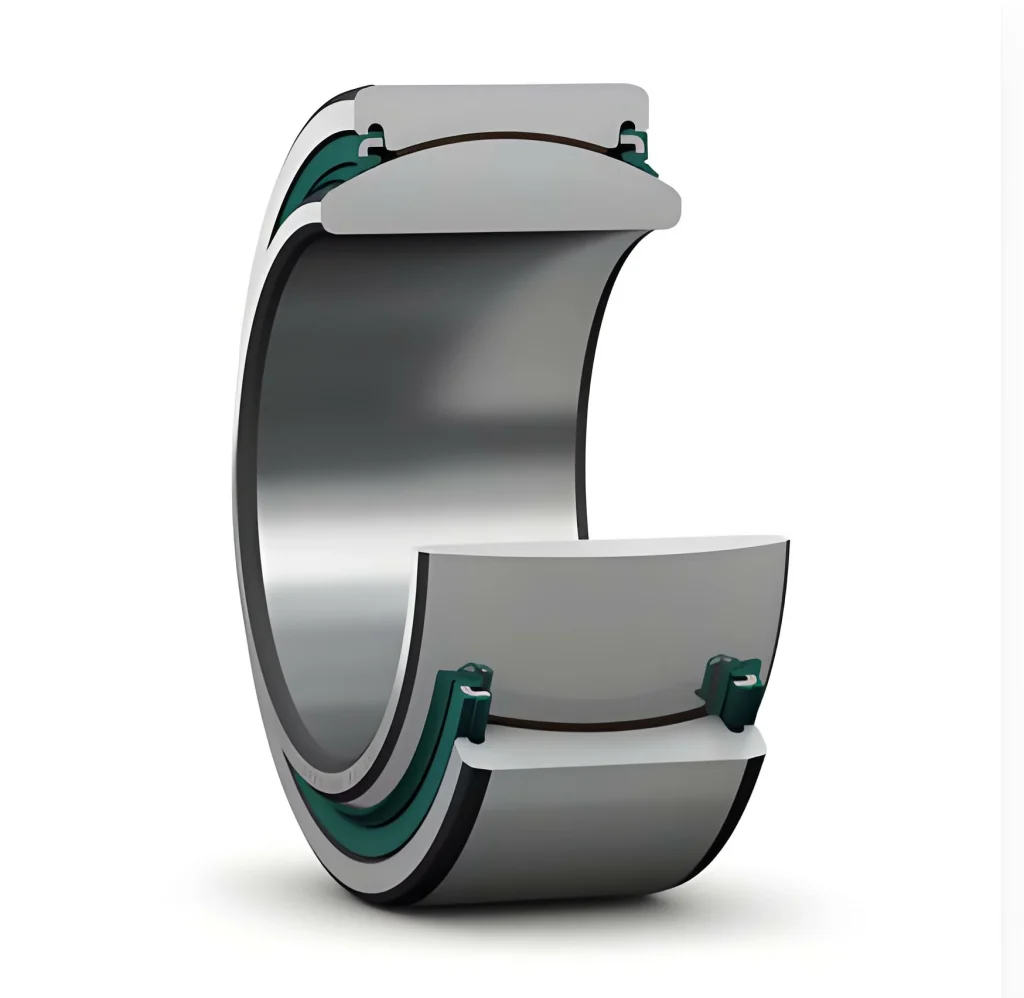
Understanding the Fundamental Principle of Plain Bearings
Plain bearings are among the oldest mechanical components, yet their operating principle remains highly relevant.
Sliding Motion Instead of Rolling
Unlike rolling bearings that rely on balls or rollers, plain bearings consist of a shaft rotating or sliding directly against a bearing surface. Friction is managed by a lubricant layer or by engineered bearing materials that minimize metal-to-metal contact.
This simplicity makes plain bearings robust and predictable under heavy loads and harsh operating conditions.
Load Distribution Characteristics
Plain bearings distribute load over a larger surface area than rolling bearings. This characteristic reduces contact stress and allows them to support high static and dynamic loads without localized fatigue.
Why This Principle Endures
The answer to how does a plain bearing work is not only mechanical but economic. Fewer components mean fewer failure points, simpler installation, and lower replacement costs in many industrial environments.
Key Components and Materials in Plain Bearings
Material selection is central to bearing performance.
Bearing Shell and Liner Materials
Plain bearings may be manufactured from bronze, steel-backed composites, polymer materials, or sintered metals. Each material choice balances load capacity, wear resistance, and lubrication requirements.
Shaft Interaction
The shaft surface finish and hardness directly influence bearing life. Proper pairing between shaft material and bearing liner ensures stable operation and minimizes abrasive wear.
Lubrication Mechanisms
Lubrication can be hydrodynamic, boundary, or dry-running depending on application. Hydrodynamic lubrication creates a full fluid film that separates surfaces, while boundary lubrication relies on additives or surface coatings during start-up and low-speed operation.
Plain Bearings vs Rolling Bearings in Industrial Decision-Making
Selecting the right bearing type is a strategic decision.
Speed and Precision Considerations
Rolling bearings excel in high-speed, low-friction applications. Plain bearings perform better at low to moderate speeds where shock loads and vibration are present.
Environmental Resistance
Plain bearings tolerate contamination, moisture, and temperature fluctuations better in many applications. This resilience reduces downtime in heavy industry and outdoor equipment.
Cost and Lifecycle Analysis
From a total cost perspective, plain bearings often outperform rolling bearings in applications where long service intervals and minimal maintenance are priorities.
For buyers evaluating what is a bearing, understanding these trade-offs is critical to aligning component choice with operational goals.
Common Industrial Applications of Plain Bearings
Plain bearings appear in industries where reliability outweighs speed.
Heavy Machinery and Construction Equipment
Excavators, cranes, and loaders rely on plain bearings for pivot points and articulation joints due to their load-bearing capability and resistance to shock.
Energy and Power Generation
Turbines, generators, and hydroelectric equipment use large plain bearings to support massive shafts with consistent stability.
Automotive and Transportation Systems
From suspension systems to steering components, plain bearings provide quiet operation and long service life under variable loads.
Performance Factors That Influence Bearing Selection
Decision-makers must evaluate operating conditions carefully.
Load Direction and Magnitude
Radial, axial, or combined loads influence bearing geometry and material selection. Plain bearings are particularly effective in oscillating or intermittent motion.
Operating Temperature
Material properties change with temperature. Polymer bearings may excel in corrosion resistance, while metallic bearings perform better at high temperatures.
Maintenance Strategy
Plain bearings can be lubricated periodically or designed as maintenance-free units. This flexibility supports different operational models across industries.
Comparative Overview of Bearing Types
The table below summarizes key differences relevant to industrial buyers.
| Bearing Type | Load Capacity | Speed Capability | Maintenance Needs |
|---|---|---|---|
| Plain bearing | Very high | Low to moderate | Low to moderate |
| Ball bearing | Moderate | High | Moderate |
| Roller bearing | High | Moderate | Moderate |
This overview helps procurement teams match bearing characteristics with real-world operating demands.
Mid-Article CTA
If you need technical guidance on selecting plain bearings for your specific application or sourcing strategy, consult our engineering team.
Role of the Supplier in Bearing Performance and Reliability
Bearing performance is influenced as much by supplier expertise as by design.
Engineering Support and Customization
Reliable suppliers assist with material selection, tolerance optimization, and application-specific design modifications that extend bearing life.
Quality Control and Traceability
Consistent manufacturing standards and batch traceability reduce failure risks, particularly in safety-critical applications.
Supply Chain Stability
Working with an experienced bearing distributor ensures continuity of supply, technical documentation, and post-sale support over the equipment lifecycle.
Advances in Plain Bearing Technology
Plain bearings continue to evolve despite their simple appearance.
Self-Lubricating and Composite Bearings
Modern composites integrate solid lubricants, enabling dry-running operation and reducing environmental impact.
Surface Engineering and Coatings
Advanced coatings reduce friction, improve corrosion resistance, and extend service life under marginal lubrication conditions.
Digital Monitoring Integration
In critical applications, sensors monitor temperature and vibration, enabling predictive maintenance even for plain bearing systems.
These innovations expand the scope of modern bearing products beyond traditional expectations.
FAQ: How Does a Plain Bearing Work?
Q1: How does a plain bearing work without rolling elements?
It relies on a sliding interface supported by lubrication or self-lubricating materials to reduce friction and wear.
Q2: Are plain bearings suitable for high-speed applications?
Generally no. They perform best at low to moderate speeds with high loads.
Q3: Do plain bearings require frequent maintenance?
Maintenance depends on lubrication type. Many modern designs are maintenance-free.
Q4: What causes plain bearing failure?
Common causes include insufficient lubrication, misalignment, excessive load, and contamination.
Q5: Are plain bearings more cost-effective than rolling bearings?
In many heavy-duty or low-speed applications, yes, due to longer service life and simpler design.
About Yigang
Yigang is a professional bearing supplier committed to delivering reliable, application-specific bearing solutions for industrial customers worldwide. By combining material expertise, strict quality control, and responsive technical support, Yigang helps manufacturers, distributors, and OEMs achieve stable performance and long-term cost efficiency across diverse operating environments.
References
- Wikipedia, Plain bearing, https://en.wikipedia.org/wiki/Plain_bearing
- SKF Group, Bearing Basics
- Engineering Explained, Friction and Lubrication