
 AR
AR  EN
EN  ES
ES  PT
PT  VI
VI  FR
FR  DE
DE  IT
IT  JA
JA  KO
KO  PL
PL  TR
TR  BG
BG  MS
MS  RU
RU 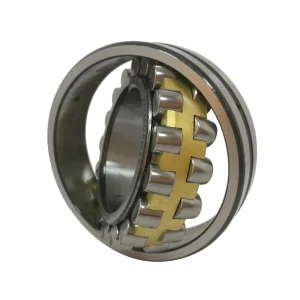
Abstract
A bearing is a fundamental machine element designed to constrain relative motion to only the desired motion and to reduce friction between moving parts. Its primary functions are to support and guide rotating or oscillating components, such as shafts or axles, and to transfer loads between different parts of a machine. By employing rolling elements like balls or rollers, or by utilizing a low-friction sliding surface, bearings facilitate smooth, efficient movement, which in turn reduces energy consumption, heat generation, and wear on machine components. This mechanism is crucial for ensuring the precision, speed, and longevity of machinery across a vast spectrum of applications, from automotive engines and agricultural equipment to industrial gearboxes and mining machinery. The selection of a specific bearing type is a complex decision, contingent upon factors such as the magnitude and direction of loads, rotational speed, operating environment, and required rigidity, making a deep understanding of their principles indispensable for modern engineering.
Key Takeaways
- A bearing is a critical component that reduces friction between moving parts.
- The two main categories are rolling-element bearings and plain bearings.
- Proper bearing selection depends on load, speed, and environmental conditions.
- Lubrication is vital for minimizing wear and dissipating heat in any bearing.
- Correct installation ensures the longevity and optimal performance of machinery.
- Understanding bearing types helps in troubleshooting and maintenance tasks.
- Ball bearings are ideal for high-speed applications with lower loads.
Table of Contents
- What is a Bearing? A Foundational Understanding
- Classification of Rolling Bearings
- The Seven Core Types of Rolling Bearings Explained
- A Deeper Look: Plain, Slewing Ring, and Linear Bearings
- The Bearing Selection Process: A Guide to Making the Right Choice
- Lubrication: The Lifeblood of a Bearing
- Bearing Handling: Installation, Maintenance, and Failure Analysis
- Frequently Asked Questions (FAQ)
- الخاتمة
- References
What is a Bearing? A Foundational Understanding
To embark on an exploration of the mechanical world is to encounter, at nearly every turn, the concept of movement. From the wheels of a haul truck in a Siberian mine to the spinning turbine of a power plant in Southeast Asia, controlled motion is the essence of machinery. At the heart of this controlled motion lies a component that, while often unseen, is utterly indispensable: the bearing. But what, in its most essential sense, is the meaning of a bearing?
Imagine trying to drag a heavy crate across a rough floor. The effort required is immense, a direct consequence of the friction between the two surfaces. Now, place a set of logs or pipes beneath that same crate. The crate now rolls forward with a fraction of the effort. In this simple analogy, the logs are performing the fundamental function of a bearing. They are mediating the relationship between the stationary floor and the moving crate, transforming the high-resistance scrape of sliding friction into the far more efficient ease of rolling friction (NTN Corporation, n.d.-b).
In engineering terms, a bearing is a machine element that constrains the relative motion between two or more parts to only the desired motion, typically rotation or linear movement. Its principal purpose is to reduce friction and support loads. Without bearings, the rotational movement of a shaft within a housing would generate immense friction, leading to rapid wear, excessive heat, and a catastrophic loss of energy and efficiency. A bearing bears the load, allowing the components to move smoothly and predictably relative to one another.
This function is not merely a matter of convenience; it is a prerequisite for precision and endurance. The high-precision spindles in a CNC machine, the robust axles on a sugarcane harvester in Brazil, or the delicate mechanisms in medical imaging equipment all depend on the ability of bearings to provide stable, low-friction support. Therefore, to understand a bearing is to understand a cornerstone of mechanical design, a component that enables the speed, power, and reliability of the machines that shape our world.
The Fundamental Divide: Rolling vs. Sliding Friction
The world of bearings is primarily divided by the method used to combat friction. This leads us to two principal families: rolling-element bearings and plain bearings. The distinction between them is analogous to the difference between rolling a ball and sliding a book across a table.
A rolling-element bearing, as the name suggests, utilizes spherical balls or cylindrical rollers placed between two rings, known as raceways. As one ring rotates relative to the other, the rolling elements roll along their tracks with minimal resistance. This is because the contact between the rolling element and the raceway is theoretically a point (for a ball) or a line (for a roller) . This small contact area results in very low rolling friction, making these bearings exceptionally efficient, especially at start-up and at high speeds.
A plain bearing, also known as a sliding bearing or a bushing, operates on a different principle. It has no rolling elements. Instead, it relies on the properties of the materials in contact and often a layer of lubricant to create a low-friction sliding interface. The shaft slides directly against the inner surface of the bearing. In many advanced applications, such as in the crankshaft of an internal combustion engine, this is a hydrodynamic bearing. The rotation of the shaft pulls a wedge of oil between itself and the bearing surface, creating a pressurized film of lubricant that completely separates the two metal surfaces. In this state, the only friction is the internal fluid friction of the oil, which can be extremely low (NSK, 2024).
The choice between these two fundamental types is a critical engineering decision, dictated by the specific demands of the application.
| Feature | Rolling-Element Bearing | Plain Bearing (Sliding Bearing) |
|---|---|---|
| Principle | Reduces friction through rolling elements (balls or rollers). | Reduces friction through direct sliding contact, often on a film of lubricant. |
| Friction | Very low starting and running friction. | Higher starting friction; can have very low running friction in hydrodynamic mode. |
| Speed | Excellent for high-speed applications. | Generally better for lower speeds, though specialized types can handle high speeds. |
| Load Capacity | Good; roller bearings have higher capacity than ball bearings. | Can be designed for extremely high load capacities, especially shock loads. |
| Precision | High rotational precision is achievable. | Precision can be high, but is dependent on the lubricant film and operating conditions. |
| Maintenance | Relatively easy to replace; lubrication can be sealed for life. | Often requires a continuous supply of lubricant; more sensitive to contamination. |
| Size | Larger radial cross-section due to rolling elements. | Very compact radial cross-section. |
| Common Use | Electric motors, gearboxes, wheels, agricultural machinery. | Engine crankshafts, heavy industrial equipment, hinges, linkages. |
Core Components: The Anatomy of a Rolling Bearing
To truly grasp the function of a rolling bearing, one must understand its constituent parts. While designs vary, a typical rolling-element bearing is a marvel of precision engineering, composed of four essential components that work in concert.
Inner and Outer Rings
These are the foundational steel rings that provide the tracks, or raceways, for the rolling elements. The inner ring fits tightly onto the rotating shaft, while the outer ring is mounted into the stationary housing. The surfaces of these raceways are ground and superfinished to an extremely smooth, precisely shaped profile. The geometry of this profile is critical; it dictates how the load is distributed across the rolling elements and influences the bearing's capacity for radial and axial loads. The material used is typically a high-carbon chromium bearing steel (like SUJ2 or 52100), which is through-hardened to achieve high hardness and exceptional resistance to fatigue and wear (NTN Corporation, n.d.-b).
Rolling Elements (Balls or Rollers)
The rolling elements are the heart of the bearing, performing the work of reducing friction. They are positioned between the inner and outer rings and roll along the raceways. There are two primary shapes:
- Balls: Spherical elements that make point contact with the raceways. This point contact minimizes friction, allowing for very high rotational speeds. However, this small contact area also limits their load-carrying capacity compared to rollers.
- Rollers: These come in several forms, including cylindrical, tapered, spherical, and needle. Rollers make line contact with the raceways. This larger contact area allows them to support much heavier loads than a ball bearing of the same size. The trade-off is slightly higher friction and consequently, lower maximum speeds .
Like the rings, rolling elements are manufactured from high-purity bearing steel to incredibly tight dimensional and geometric tolerances.
The Cage (or Retainer)
If you were to place rolling elements between two rings without any separating device, they would bunch up, rub against each other, and cause friction and failure. The cage is the component that solves this problem. Its primary roles are to maintain proper spacing between the rolling elements, guide their movement, and prevent them from falling out during handling and assembly (NSK, 2024). Cages can be made from various materials, each chosen for specific operating conditions.
| Cage Material | Primary Advantages | Common Applications |
|---|---|---|
| Pressed Steel | Cost-effective, strong, good for high temperatures. | General-purpose ball and roller bearings. |
| Machined Brass | High strength, suitable for large bearings and high speeds. | Large industrial machinery, applications with high vibration. |
| Polyamide (Nylon) | Lightweight, low noise, good for high speeds, corrosion-resistant. | High-speed electric motors, automotive applications. |
Seals and Shields
Many bearings are intended to operate for long periods without maintenance. To achieve this, they must be protected from contaminants like dust, dirt, and moisture, and the internal lubricant (usually grease) must be retained. This is the job of seals and shields.
- Shields (ZZ or 2Z): These are metal discs fitted into the outer ring with a very small gap to the inner ring. They provide good protection against larger solid particles but are not effective against fine dust or liquids. Because they are non-contacting, they add no friction and do not limit the bearing's speed.
- Seals (LLB, LLU, or 2RS): These are typically made of synthetic rubber (like NBR or FKM) bonded to a steel insert. The seal has a "lip" that makes light contact with the inner ring, providing an excellent barrier against both solid and liquid contaminants. This contact creates a small amount of friction and heat, which can slightly limit the maximum rotational speed compared to an open or shielded bearing.
The choice between an open, shielded, or sealed bearing is a practical decision based on the cleanliness of the operating environment and the maintenance requirements of the application.
Classification of Rolling Bearings
The vast family of rolling bearings can be organized based on two primary criteria: the shape of the rolling element and the direction of the load they are designed to support. This classification provides a logical framework for understanding and selecting the right component for a given mechanical task.
Classification by Rolling Element
The most fundamental distinction is between ball bearings and roller bearings. This choice directly impacts the bearing's performance characteristics regarding speed, load capacity, and rigidity.
- Ball Bearings: These use spherical balls as the rolling elements. As previously discussed, the point contact between the ball and the raceway results in very low rolling friction. This makes ball bearings the superior choice for applications where high speed is the primary requirement, such as in electric motor spindles, fans, and power tools. Their load capacity is moderate.
- Roller Bearings: These use various types of rollers (cylindrical, tapered, spherical, needle) as their rolling elements. The line contact between the roller and raceway provides a much larger contact area. Consequently, roller bearings can support significantly heavier loads and offer greater rigidity than ball bearings of a similar size. They are the workhorses of heavy industry, found in applications like gearboxes for wind turbines in Russia, conveyor systems in South African mines, and the wheel hubs of heavy trucks navigating the roads of the Middle East.
Classification by Load Direction
The second major classification is based on the direction of the load the bearing is designed to primarily accommodate. Loads are defined relative to the axis of the shaft. A load perpendicular to the shaft is a radial load, while a load parallel to the shaft is an axial load or thrust load.
- Radial Bearings: These are designed primarily to support radial loads. Most radial bearings, like the common deep groove ball bearing, can also handle some amount of axial load in combination with the radial load. Their ability to handle axial loads depends on their design and contact angle.
- Thrust Bearings: These are specifically designed to support loads that are predominantly axial. A simple thrust bearing cannot support any radial load. They are essential in applications like the base of a rotating crane or the propeller shaft of a ship, where the primary force is a pushing or pulling action along the axis of rotation.
The contact angle (α) is the key geometric parameter that formally distinguishes between these two types. As defined by standards organizations, a bearing with a contact angle of 45° or less is classified as a radial bearing. A bearing with a contact angle greater than 45° is classified as a thrust bearing . This angle represents the line along which the load is transmitted from one raceway to the other through the rolling element. A zero-degree contact angle (as in a pure cylindrical roller bearing) means it can only take radial load, while a 90-degree contact angle (as in a simple thrust ball bearing) means it can only take axial load.
The Seven Core Types of Rolling Bearings Explained
Within the broad classifications, engineers can choose from a diverse array of specific bearing types, each with a unique geometry and performance profile. Let's delve into the seven most common and fundamental types of rolling-element bearings.
1. Deep Groove Ball Bearings
This is arguably the most common and versatile type of bearing in existence. Its defining feature is the deep, continuous raceway groove on both the inner and outer rings, which has a circular arc with a radius slightly larger than that of the balls.
- Working Principle: The deep grooves provide excellent support for the balls, allowing the bearing to sustain not only radial loads but also significant axial loads in both directions. This versatility is its greatest strength.
- Performance: They are characterized by low friction, low noise, and the ability to operate at very high speeds. They are simple in design, non-separable, and require little maintenance, especially when supplied as a sealed and greased unit.
- التطبيقات: Their adaptability makes them ubiquitous. They are found in small electric motors, household appliances (washing machines, vacuum cleaners), automotive water pumps and alternators, office equipment, and light-duty industrial gearboxes across all regions. In developing economies, they are crucial for the manufacture of affordable consumer goods and light machinery.
2. Angular Contact Ball Bearings
These bearings are designed with raceways on the inner and outer rings that are displaced relative to each other in the direction of the bearing axis. This design creates a specific contact angle, typically ranging from 15° to 40°.
- Working Principle: Because of the contact angle, these bearings are exceptionally well-suited to handle combined loads (simultaneous radial and axial loads). A single angular contact bearing can only support an axial load in one direction. For this reason, they are almost always used in pairs, mounted in either a "back-to-back" (DB) or "face-to-face" (DF) arrangement. This pairing allows them to support axial loads in both directions and provides a very rigid system.
- Performance: They offer higher speed capabilities than roller bearings and higher load capacity and rigidity than deep groove ball bearings. By adjusting the preload during mounting, their rigidity can be precisely controlled.
- التطبيقات: Their high precision and rigidity make them essential for machine tool spindles (lathes, milling machines), high-speed pumps and compressors, and high-performance automotive gearboxes and differentials.
3. Self-Aligning Ball Bearings
This ingenious design features two rows of balls and a common sphered raceway in the outer ring. The center of curvature of the outer ring raceway coincides with the center of the bearing itself.
- Working Principle: This spherical outer raceway allows the inner ring, balls, and cage assembly to freely align itself relative to the outer ring. This means the bearing can automatically compensate for angular misalignment between the shaft and the housing, which might be caused by shaft deflection under load or mounting inaccuracies.
- Performance: Their primary advantage is their ability to tolerate misalignment (typically 2° to 3°). They have the lowest friction of all rolling bearings, allowing them to run cooler at high speeds. However, their axial load capacity is limited.
- التطبيقات: They are ideal for applications with long shafts where deflection is likely, such as in textile machinery, agricultural equipment (like long conveyor shafts on harvesters used in the vast farmlands of Russia or Southeast Asia), and ventilation fans.
4. Cylindrical Roller Bearings
These bearings use cylindrical rollers as their rolling elements. In their simplest form (type NU or N), one of the rings has two ribs to guide the rollers, while the other ring has no ribs.
- Working Principle: The line contact between the rollers and raceways gives these bearings a very high radial load-carrying capacity and high stiffness. The design with one ribless ring allows for axial displacement of the shaft relative to the housing within the bearing itself. This makes them ideal for use as "floating" bearings in arrangements that must accommodate thermal expansion of the shaft. Other configurations with ribs on both rings (like NJ or NUP types) can support light or intermittent axial loads.
- Performance: They offer extremely high radial load capacity and are suitable for high-speed operation. Their separable design (inner and outer rings can be mounted independently) simplifies installation and dismounting.
- التطبيقات: They are workhorses in heavy industry, used in applications like industrial gearboxes, rolling mills in steel production, electric motors, and the axleboxes of railway vehicles.
5. Tapered Roller Bearings
In this design, both the inner and outer ring raceways and the rollers themselves are tapered. The extensions of their contact lines all converge at a common point (the apex) on the bearing axis.
- Working Principle: This tapered geometry makes them uniquely capable of accommodating heavy combined radial and axial loads. When a radial load is applied, an axial force component is induced, which must be counteracted. Therefore, like angular contact ball bearings, tapered roller bearings are typically used in pairs, mounted in a back-to-back or face-to-face arrangement. Their axial clearance or preload can be precisely set during mounting.
- Performance: They offer high load capacity for both radial and axial loads, providing a very rigid bearing arrangement. Their separable design facilitates mounting.
- التطبيقات: They are dominant in applications with heavy combined loads, such as automotive wheel hubs (cars, trucks, and buses), agricultural machinery axles, gearbox shafts in heavy equipment used in construction and mining, and rolling mill machinery. Explore a range of roller bearings for such demanding applications.
6. Spherical Roller Bearings
Similar to self-aligning ball bearings, these bearings are designed to be self-aligning. They feature two rows of symmetrical, barrel-shaped rollers (spherical rollers) and a common sphered raceway in the outer ring. The inner ring has two raceways, inclined at an angle to the bearing axis.
- Working Principle: The design allows the bearing to tolerate significant angular misalignment and shaft deflection. The robust rollers and their geometry provide a very high load-carrying capacity for both radial and axial loads in both directions.
- Performance: They combine very high load capacity with the ability to accommodate misalignment, making them incredibly robust and reliable in harsh conditions. They are the go-to solution for the most demanding applications.
- التطبيقات: They are indispensable in heavy industrial applications where heavy loads, shock, and misalignment are common. Examples include mining machinery (crushers, vibrating screens), pulp and paper machines (rollers), large industrial gearboxes, and continuous casting machines in the steel industry.
7. Thrust Bearings
Thrust bearings are designed to manage purely, or predominantly, axial loads. They come in both ball and roller types.
- Working Principle: In a simple thrust ball bearing, the balls are contained in a cage between two washers (a shaft washer and a housing washer) with grooved raceways. They can support axial loads in one direction only and cannot take any radial load. Spherical roller thrust bearings are a more advanced type; they are self-aligning and can accommodate very heavy axial loads as well as some simultaneous radial load.
- Performance: Their performance is highly specialized. They provide a high-stiffness solution for axial loads but generally have lower speed limits than radial bearings. Lubrication is critical, as centrifugal forces tend to fling the lubricant away from the contact zones.
- التطبيقات: They are used in applications such as crane hooks, automotive clutch release mechanisms, vertical pump shafts, and the rotating tables of large machine tools.
A Deeper Look: Plain, Slewing Ring, and Linear Bearings
While the seven core rolling-element types cover a vast range of applications, the universe of bearings is even broader. Understanding these other families is essential for a complete picture.
Plain Bearings
As introduced earlier, plain bearings operate on the principle of sliding motion. They are, in essence, sleeves or bushings that support a shaft. Their simplicity belies their sophistication.
- Types and Materials: They can be made from a wide variety of materials, including bronze, graphite-impregnated metals, and advanced polymers (like PTFE). The material is chosen based on the need for self-lubrication, corrosion resistance, or high-load capability. Hydrodynamic plain bearings, used in car engines, are a system comprising the bearing shells, the shaft journal, and a constant supply of pressurized oil.
- Advantages: Their key benefits include a very small radial cross-section, excellent shock load resistance (as the load is distributed over a large surface area), quiet operation, and a lower cost for simple applications. They can also operate in environments with heavy contamination where a rolling-element bearing would quickly fail.
- التطبيقات: They are found in vehicle suspensions, the pivot points of construction equipment (like bulldozers and excavators), high-load/low-speed industrial applications, and in lubricated-for-life hinges and linkages.
محامل حلقة الدوران
A slewing ring bearing is a large-diameter bearing designed to handle heavy, complex loads, including high axial loads, radial loads, and tilting moments, all within a single integrated unit.
- Structure: Imagine a very large ball or roller bearing, often a meter or more in diameter. It typically consists of an inner ring and an outer ring, one of which usually incorporates a gear. This integrated gear is a key feature, allowing the bearing to be directly driven by a pinion to produce rotation. They can use ball or roller elements, often in multi-row configurations, to handle the complex loads.
- الوظيفة: They are the component that allows massive structures to rotate smoothly and safely. They serve as the connection point between the stationary base and the rotating superstructure of a machine.
- التطبيقات: They are essential for heavy rotating machinery. Think of the main bearing connecting the turret to the chassis of a large excavator or crane, the yaw bearing that allows a wind turbine's nacelle to face the wind, or the rotating base of a bottling machine or a radar antenna.
Linear Bearings
Not all desired motion is rotational. For applications requiring smooth, low-friction movement along a straight line, linear bearings are used.
- Structure and Principle: A common type of linear bearing is a linear ball bushing. It consists of an outer cylinder containing several circuits of recirculating balls. These balls run in grooves along a precision-ground cylindrical shaft. As the bushing moves along the shaft, the balls roll, providing very low friction. The balls then recirculate within the bushing to return to the start of the load zone. Other types include linear roller guides, which use rollers for higher load capacity and rigidity.
- الوظيفة: They provide precise, repeatable, and low-friction guidance for linear motion. They are the linear equivalent of a rotational rolling-element bearing.
- التطبيقات: They are fundamental to automation and precision machinery. They are used in 3D printers and CNC machines for positioning the tool head, in robotic arms for extension and retraction, in medical scanning equipment for moving the patient bed, and in a vast array of automated manufacturing and packaging systems.
The Bearing Selection Process: A Guide to Making the Right Choice
Selecting the optimal bearing is a process of balancing competing requirements to achieve the desired performance, reliability, and cost. It is a thoughtful exercise that goes beyond simply picking a part from a catalog. Following a structured process, as recommended by major manufacturers like SKF (2024), ensures that all critical factors are considered.
Step 1: Analyze Operating Conditions and Requirements
The first step is to build a complete picture of the application's demands. This involves gathering data and asking critical questions:
- Loads: What is the magnitude and direction of the loads? Are they purely radial, purely axial, or combined? Are there shock loads or vibrations? For example, a rock crusher in a quarry imposes severe shock loads, while a high-speed fan applies a steady radial load.
- Rotational Speed: What is the operational speed (rpm)? Is it constant or variable? High speeds generate more heat and require bearings with low friction, like ball bearings.
- Available Space: What are the physical constraints? The shaft diameter (bore), the housing diameter (outer diameter), and the axial width are often predetermined by the machine's design, limiting the possible bearing choices.
- Rigidity: How much deflection is permissible under load? Applications like machine tool spindles require extremely high rigidity to maintain accuracy, often necessitating the use of preloaded angular contact or tapered roller bearings.
- Misalignment: Is there potential for the shaft to deflect or for the bearing seats in the shaft and housing to be misaligned? If so, a self-aligning bearing (self-aligning ball or spherical roller) is essential to prevent premature failure.
- Operating Environment: What is the ambient temperature? Will the bearing be exposed to contaminants like dust (e.g., in a cement plant in the Middle East) or moisture (e.g., in food processing in Southeast Asia)? This will dictate the need for seals and the type of lubricant.
Step 2: Tentative Bearing Type Selection
Based on the analysis in Step 1, you can make a preliminary selection of the bearing type.
- For high speeds and light-to-moderate loads, a deep groove ball bearing is a good starting point.
- For heavy radial loads, a cylindrical roller bearing is a strong candidate.
- For heavy combined loads, a tapered roller bearing or محمل كريات التلامس الزاوي should be considered.
- If misalignment is a key factor, a spherical roller bearing or self-aligning ball bearing is necessary.
Step 3: Determine Bearing Size (Life Calculation)
Once a type is chosen, the required size must be determined. This is done by calculating the bearing's required basic dynamic load rating (Cr) to achieve a desired rating life (L10).
The concept of bearing life is statistical. The L10 rating life is the number of revolutions that 90% of a group of identical bearings will complete or exceed before the first evidence of fatigue appears (NTN Corporation, 2024).
The fundamental life equation is:
L10 = (C / P)^p
Where:
- L10 is the basic rating life in millions of revolutions.
- C is the basic dynamic load rating (the value you look for in the catalog).
- P is the equivalent dynamic bearing load (a calculated value that represents the combined effect of radial and axial loads).
- p is the life exponent (p = 3 for ball bearings, p = 10/3 for roller bearings).
To use this, you first calculate the equivalent load P based on your application's forces. Then, you decide on a required life (e.g., 20,000 hours for an industrial gearbox). You can then rearrange the formula to solve for the required C. Finally, you consult the bearing catalog to find the smallest bearing of your chosen type that has a dynamic load rating equal to or greater than the calculated value.
Step 4: Verify Other Factors
After selecting a size, several other factors must be checked.
- Static Load Capacity: If the bearing will be subjected to very heavy loads while stationary or at very low speeds, or to heavy shock loads, its basic static load rating (C0) must be checked to ensure it is sufficient to prevent permanent deformation of the raceways.
- Speed Limit: The catalog will list a limiting speed for both grease and oil lubrication. The application's operating speed must be below this limit. If not, a different bearing type or a more advanced lubrication method (like oil jet) may be needed.
- Fit and Clearance: The way a bearing is mounted on the shaft and in the housing (the "fit") affects its internal clearance. A tight "interference fit" reduces the internal clearance. The initial bearing clearance (e.g., CN, C3, C4) must be chosen so that the final operating clearance is appropriate—not too tight (which causes overheating) and not too loose (which causes noise and reduced life).
This iterative process of selection and verification ensures that the final bearing choice is robust, reliable, and well-suited to its task.
Lubrication: The Lifeblood of a Bearing
A bearing cannot perform its function without proper lubrication. The lubricant's primary role is to form a thin film between the rolling elements and the raceways, preventing direct metal-to-metal contact. This film is often only a fraction of a micrometer thick, yet it is fundamental to the bearing's operation.
The functions of lubrication are multifaceted (NTN Corporation, 2024):
- Reduce Friction and Wear: This is the primary function, minimizing energy loss and preventing surface damage.
- Dissipate Heat: The lubricant carries away heat generated by friction, preventing the bearing from overheating.
- Prevent Corrosion: The lubricant film protects the highly finished steel surfaces from rust and corrosion.
- Exclude Contaminants: The presence of lubricant helps to block the entry of dust, dirt, and moisture.
The two main types of lubricants used are grease and oil.
Grease Lubrication
Grease is the most common lubricant for rolling bearings, used in an estimated 80-90% of applications. It consists of a base oil (mineral or synthetic) that is thickened with a metallic soap (like lithium) or a non-soap agent (like polyurea) to give it a semi-solid consistency.
- Advantages: Grease is easy to handle and retain within the bearing, allowing for simple sealing arrangements. Many bearings come "sealed-for-life," pre-filled with the correct amount of grease, eliminating the need for maintenance.
- Disadvantages: Grease has limited ability to dissipate heat compared to oil. Its useful life is also finite, as the base oil will eventually degrade or separate from the thickener.
- Selection and Application: The amount of grease is critical. Too little will lead to starvation and failure; too much will cause churning, leading to high friction and overheating. Typically, the bearing itself is filled to about one-third of its free space.
Oil Lubrication
Oil lubrication is preferred for applications involving high speeds or high temperatures where significant heat needs to be removed from the bearing.
- Advantages: Oil is an excellent coolant. Circulating oil systems can be filtered to remove contaminants, extending bearing life. A wide range of viscosities is available to suit different speed and load conditions.
- Disadvantages: Oil lubrication systems are more complex and expensive than grease systems. They require more sophisticated sealing to prevent leakage.
- Methods:
- Oil Bath: The simplest method, where the bearing is partially submerged in a reservoir of oil. Suitable for low-to-moderate speeds.
- Oil Mist/Air-Oil: A stream of compressed air carries fine droplets of oil to the bearing. This provides minimal, precise lubrication with very low friction, ideal for high-speed spindles.
- Oil Jet: A high-pressure jet of oil is sprayed directly onto the bearing's internal components. This is the most effective method for cooling and lubrication in extreme-speed applications like jet engine turbines.
The most critical property of a lubricating oil is its viscosity. This is its resistance to flow. The correct viscosity depends on the bearing's size, speed, and load. An oil film of sufficient thickness must be formed to separate the rolling surfaces, a principle known as elastohydrodynamic lubrication (EHL).
Bearing Handling: Installation, Maintenance, and Failure Analysis
A high-quality bearing can have its life cut tragically short by improper handling and installation. These are precision components, and they must be treated as such from the moment they are unpacked until the end of their service life.
Installation
Proper installation is the foundation of long bearing life. The goal is to mount the bearing onto its shaft and into its housing without causing any damage, achieving the correct fit, and ensuring cleanliness.
- Cleanliness: The work area, tools, shaft, and housing must be impeccably clean. Even a tiny particle of dirt or a metal chip can create a dent in a raceway that will become a starting point for fatigue failure. Bearings should be kept in their original packaging until the moment of installation.
- Mounting Methods:
- Cold Mounting (Press Fit): For smaller bearings, a press or a hammer and a fitting tool (a sleeve that contacts the entire face of the ring being mounted) can be used. Force must only be applied to the ring with the interference fit. For example, when mounting onto a shaft, press only on the inner ring. Pressing on the outer ring would transmit the force through the rolling elements, causing damage (NTN Corporation, n.d.-a).
- Hot Mounting (Shrink Fit): For larger bearings or those with a tight interference fit, it is much easier and safer to heat the bearing to expand it. The bearing is heated to around 80-100°C above the shaft temperature, which expands the bore enough for it to slide easily onto the shaft. Induction heaters are the preferred method as they provide fast, clean, and uniform heating. Oil baths can also be used, but open flames must never be used.
Maintenance and Monitoring
Regular monitoring of a machine's condition can provide early warnings of bearing trouble.
- Temperature: A sudden increase in bearing operating temperature often indicates a problem with lubrication or mounting.
- Noise and Vibration: A change in the sound of a running bearing is a classic sign of damage. A healthy bearing produces a smooth, continuous whirring sound. A damaged bearing might produce a rumbling, squealing, or clicking noise. Vibration analysis using specialized equipment is a powerful predictive maintenance tool that can detect the characteristic frequencies of bearing damage long before it becomes catastrophic.
Failure Analysis
When a bearing does fail, a careful examination of the damaged components can reveal the root cause of the failure, allowing for corrective action to prevent a recurrence. This is a critical part of a robust maintenance strategy. Common failure modes include:
- Fatigue (Spalling): This is the natural end-of-life failure mode, appearing as the flaking or pitting of material from the raceway or rolling elements. If it occurs prematurely, it points to overloading or incorrect bearing selection.
- Wear: Abrasive wear, caused by hard contaminants in the lubricant, appears as dull, lapped surfaces. Adhesive wear (smearing) is caused by inadequate lubrication and appears as smeared or torn surface material.
- Corrosion: Rust or etching on the bearing surfaces, caused by the ingress of water or corrosive fluids. Fretting corrosion appears as red or black patches on the bore or outside diameter, caused by micro-movement between the bearing and its seat in a loose-fit application.
- Electrical Damage (Fluting): If electric current passes through a bearing, it can arc across the thin lubricant film between the rolling elements and raceways, creating tiny pits. Over time, this leads to a characteristic washboard or "fluted" pattern on the raceways.
- Fracture: A cracked ring or rolling element is typically the result of extreme shock load, severe mishandling during installation, or excessive interference fit.
By understanding what these patterns mean, technicians and engineers can diagnose problems and improve the reliability of their machinery, whether it's a fleet of delivery trucks in South Africa or a paper mill in Southeast Asia. For those in heavy industry, robust industrial bearing solutions are often designed with these failure modes in mind.
Frequently Asked Questions (FAQ)
1. What is the main purpose of a bearing? The primary purpose of a bearing is to reduce friction between moving parts and to support loads. It allows for smooth and efficient rotation or linear motion, which is essential for the function and longevity of almost all types of machinery.
2. What is the difference between a ball bearing and a roller bearing? A ball bearing uses spherical balls and is best for high-speed applications with lighter loads due to its low-friction point contact. A roller bearing uses cylindrical, tapered, or spherical rollers, which provides a line of contact, allowing it to support much heavier loads at lower to moderate speeds.
3. Why do some bearings need to be mounted in pairs? Bearings with a contact angle, like angular contact ball bearings and tapered roller bearings, induce an axial force when a radial load is applied. They can only support axial load in one direction. Mounting them in pairs (e.g., back-to-back) allows the pair to handle axial loads in both directions and creates a very rigid and stable arrangement.
4. How do I know if a bearing is failing? Common signs of a failing bearing include an increase in noise (rumbling, grinding, or squealing), a rise in vibration, or an abnormal increase in operating temperature. Regular monitoring of these factors is a key part of predictive maintenance.
5. What is more important for a bearing: grease or oil? Both are vital, but their use depends on the application. Grease is used in about 90% of applications because it is simple to use and retain. Oil is necessary for high-speed or high-temperature applications where heat must be actively removed from the bearing. The most important thing is that the bearing has the correct type and amount of lubricant for its operating conditions.
6. Can I reuse a bearing after removing it? It depends. If the bearing is removed carefully without damage and shows no signs of wear, spalling, or corrosion, it can potentially be reused. However, it is often difficult to remove a bearing without applying some force that could cause minor, unseen damage. For critical applications, it is generally recommended to replace the bearing.
7. What does the "C3" in a bearing part number mean? "C3" refers to the bearing's internal clearance. It signifies that the bearing has an internal clearance that is greater than the "Normal" (CN) standard. This extra clearance is often required in applications where a tight interference fit is used or where there is a significant temperature difference between the inner and outer rings, as both conditions reduce the operating clearance.
الخاتمة
The bearing, in its elegant simplicity, stands as a testament to human ingenuity. It is the silent enabler, the component that transforms the brute force of friction into the grace of controlled motion. From the fundamental principles of rolling versus sliding to the intricate geometries of its many forms—ball, roller, plain, and linear—the bearing is a solution tailored to the specific challenges of load, speed, and precision. Its selection is not a trivial matter but a deliberate process of engineering analysis, balancing performance requirements with the practicalities of installation and maintenance. Understanding the meaning of a bearing is to appreciate how these small, precise components make the grand and powerful machinery of our modern world possible, ensuring that our engines turn, our wheels spin, and our industries produce with efficiency and endurance.
References
NTN Corporation. (n.d.-a). Ball and roller bearings (CAT.No.2203-3/E). Retrieved from https://www.ntnglobal.com/en/products/catalog/pdf/2203E.pdf
NTN Corporation. (n.d.-b). Rolling bearings handbook (CAT. No. 9012-@/E). Retrieved from
NSK. (2024). Bearing basics (uses, types, and components). Retrieved from https://www.nsk.com/tools-resources/abc-bearings/bearing-basics
NSK. (n.d.). Rolling bearings for industrial machinery (CAT. No. E1103). Retrieved from https://www.nsk.com/content/dam/nsk/am/en_us/documents/bearings-americas/Rolling-Bearings-for-Industrial-Machinery.pdf
SKF. (2024). Bearing basics. Retrieved from
SKF. (2024). Principles of rolling bearing selection. Retrieved from